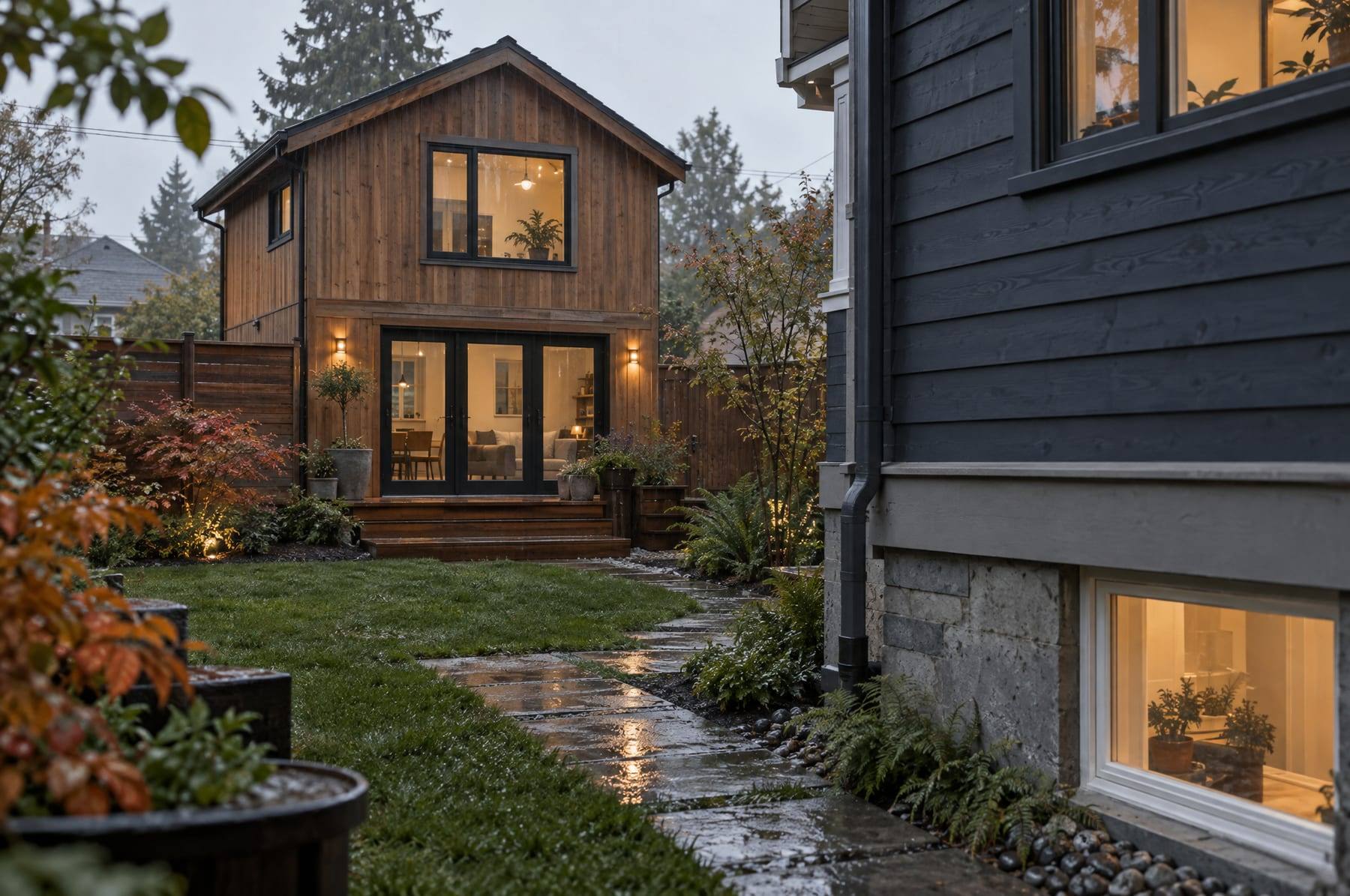
The short answer
On a Seattle lot there are three ways to add room. A backyard cottage (DADU) and a basement or attached unit (AADU) are accessory dwelling units: up to two per lot, 1,000 square feet each or 1,200 with three or more bedrooms, no parking, rentable, and permitted with full plan review. An addition enlarges the house itself, and one story at ground level up to 750 square feet can use the quicker STFI permit. Lot coverage of 50 percent, floor area, setbacks and trees decide which fits.
Key points
- 01A DADU and an AADU are both ADUs under SMC 23.42.022: two per lot in any mix, no parking, no owner occupancy, and condominium sale allowed but no subdivision.
- 02An addition is part of the house: it cannot be rented as a separate home, but a ground-level one-story addition up to 750 square feet can use SDCI's STFI permit.
- 03A basement unit uses no lot coverage; a cottage or a ground-level addition uses part of the 50 percent limit.
- 04Only an ADU brings King County's capacity charge of $46.01 a month for 15 years.
In this article (6 sections)
What is the difference between a DADU, an AADU and an addition?
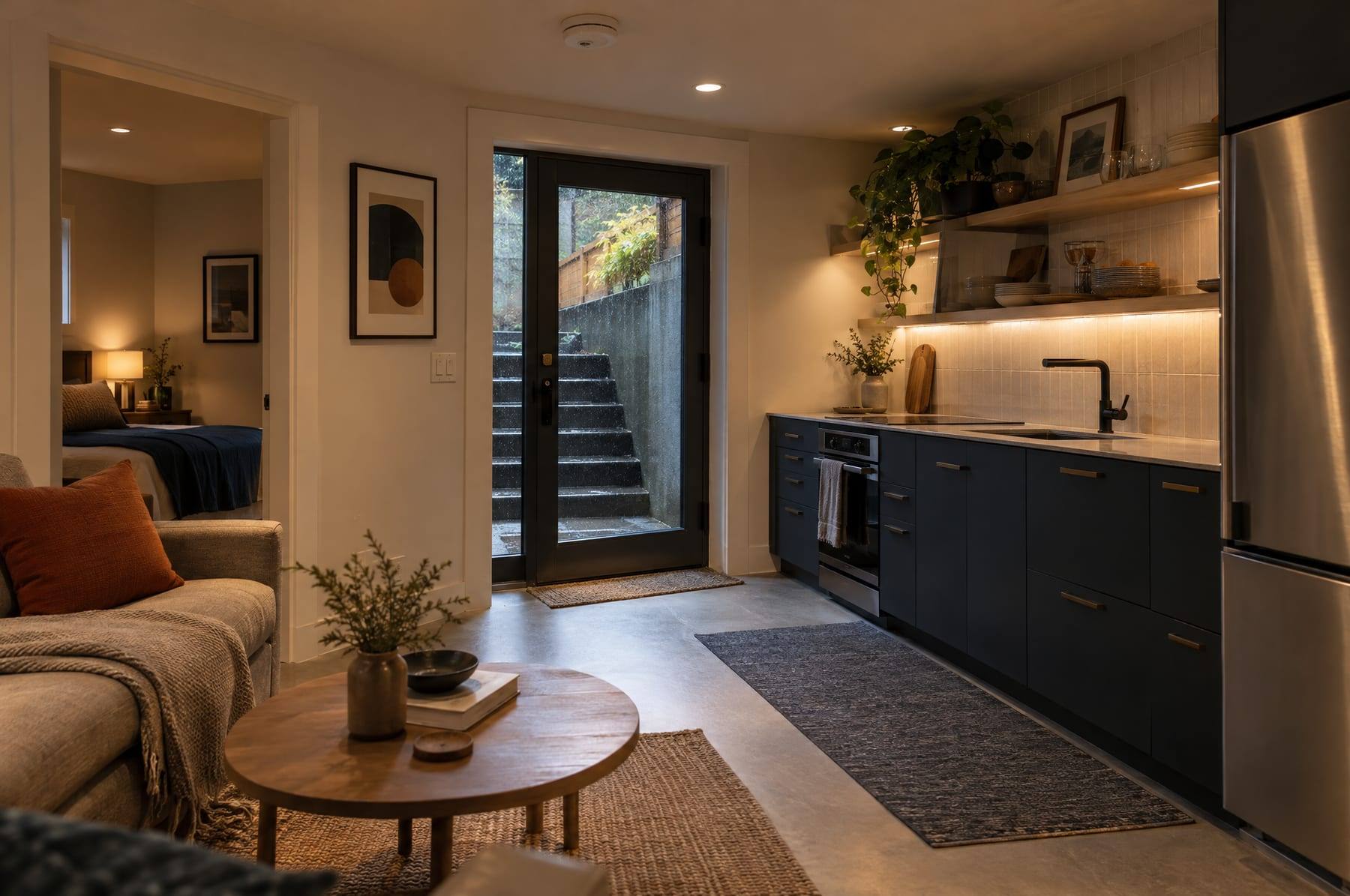
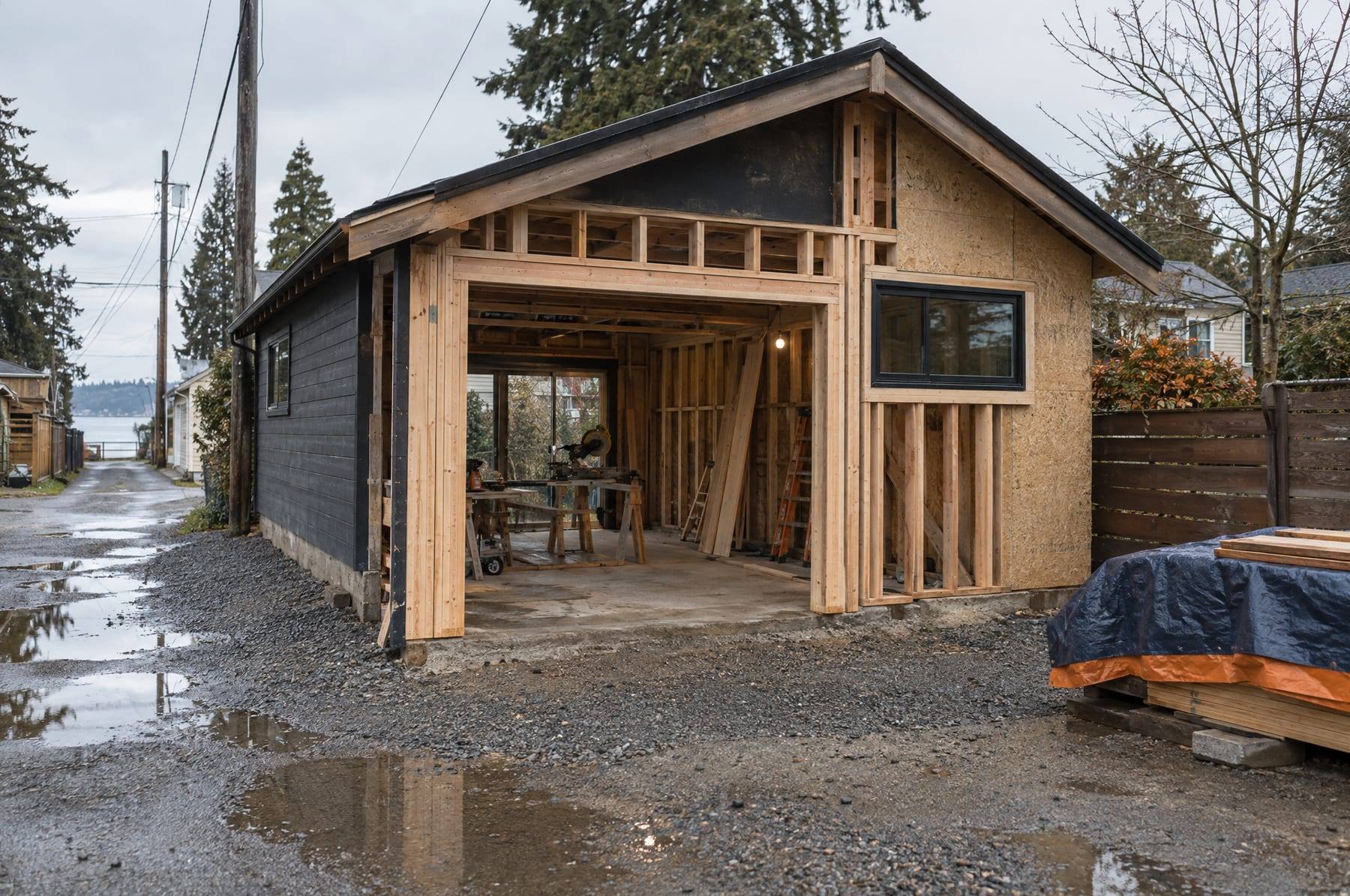
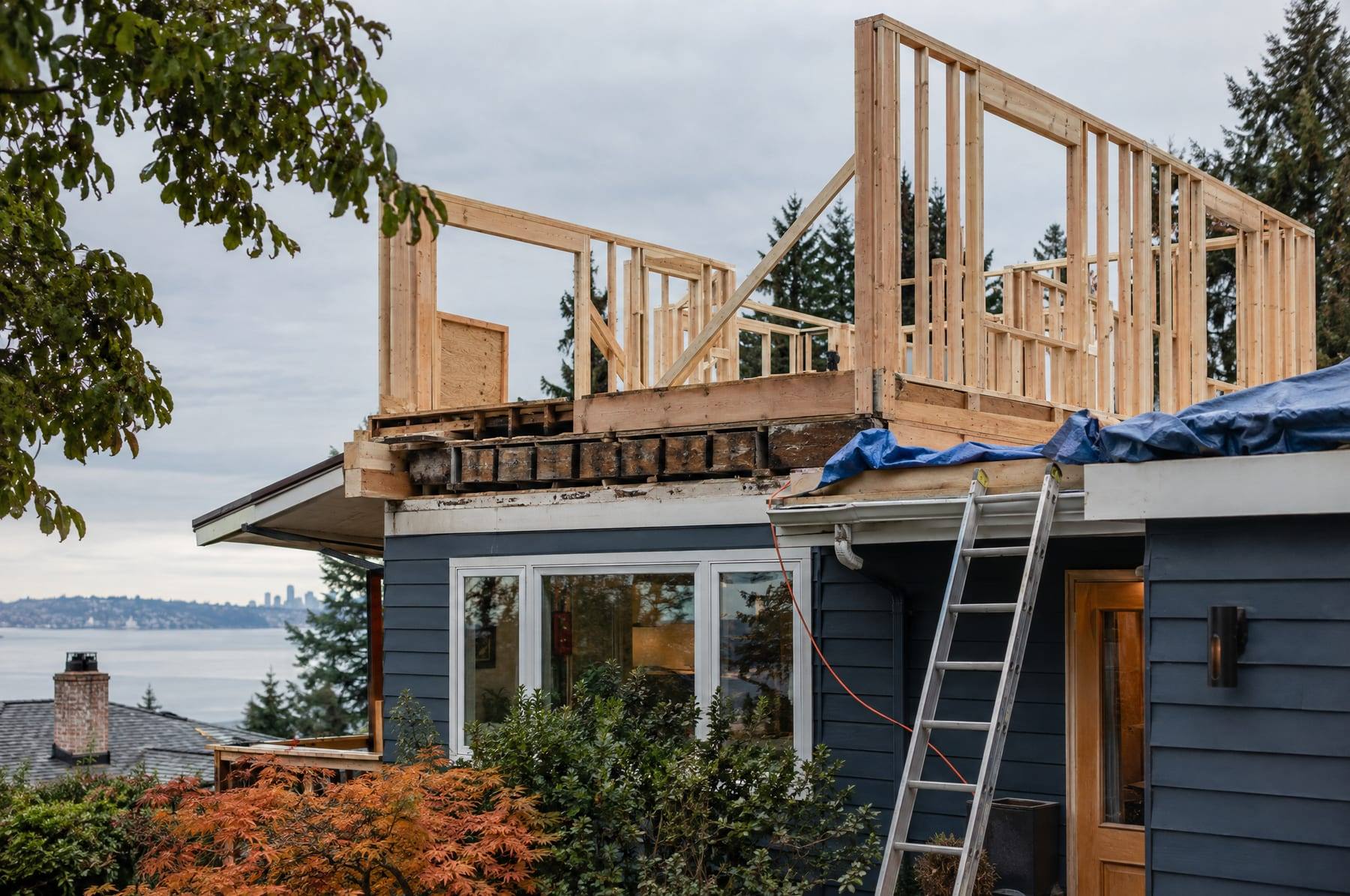
Who lives there, and how the city counts it. SDCI defines an accessory dwelling unit (ADU) as a separate living space within a house or on the same property as a house. A legally permitted unit in the home is an attached accessory dwelling unit (AADU), and one on the property but not in the home is a detached accessory dwelling unit (DADU), often called a backyard cottage. An addition is more room for the house you live in: a family room, a primary suite, a dormer or a second story.
| Question | Backyard cottage (DADU) | Basement or attached unit (AADU) | Addition |
|---|---|---|---|
| Is it a separate home? | Yes | Yes | No, it is part of the house |
| Size limit | 1,000 sq ft, or 1,200 with three or more bedrooms | The same, but underground floor area is not counted, and a unit in a part of the house that existed on July 23, 2023 may be larger | Set by the zone's coverage, floor area and height limits |
| Uses lot coverage | Yes | Only if it adds a footprint | Yes, if it adds a footprint |
| Seattle permit route | Full plan review; with a pre-approved plan, 2 to 6 weeks in most cases | Full plan review | STFI for one story at ground level up to 750 sq ft or a small dormer; full review for a second story |
| Parking | None required | None required | No change, since no home is added |
| Rent it as a separate home | Yes | Yes | No |
| Sell it separately | As a condominium only; no subdivision | As a condominium only; no subdivision | No |
| King County capacity charge | $46.01 a month for 15 years | $46.01 a month for 15 years | None |
From SMC 23.42.022 as amended by Ordinance 127376, the city's January 2026 summary of the Neighborhood Residential rules, SDCI's ADU page and Tip 316, and King County's 2026 capacity charge rate.
Which option fits the lot you have?
Start with what the lot has left. In Neighborhood Residential zones, the city's January 2026 summary sets these limits, and since January 21, 2026 accessory units count toward density, floor area and lot coverage like any other home.
| Limit | Rule | What it means for each option |
|---|---|---|
| Lot coverage | 50 percent | A cottage and a ground-level addition both use it; a basement unit does not. SDCI counts all structures, covered areas and decks 36 in or more above the ground. |
| Floor area ratio | 0.6 where density is below one home per 4,000 sq ft, then 0.8, 1.0 and 1.6 as density rises; lots under 5,000 sq ft may have 2,500 sq ft whatever the ratio | Every option adds floor area. Adding a home raises the density and can raise the ratio; an addition cannot. |
| Rear setback | 15 ft for the house on a lot with one or two homes, 0 at an alley; 5 ft for an ADU, 0 at an alley | A cottage can sit much closer to the back line than an addition can |
| Side setbacks | 5 ft on average, 3 ft at the least | Limits how wide a cottage or a bump-out can be |
| Between buildings | At least 5 ft | A cottage needs room from the house |
| Height | 32 ft plus pitched roof allowances; 42 ft in some cases, such as when a Tier 2 tree is kept | Room for a two-story cottage or a second story |
| Density | The greater of four homes or one per 1,250 sq ft, or six near major transit or with two affordable homes; no more than two ADUs | With one house, one or two ADUs fit within the count |
Lots with steep slopes, creeks, wetlands or shoreline have reduced density and coverage. Other zones and other cities differ.
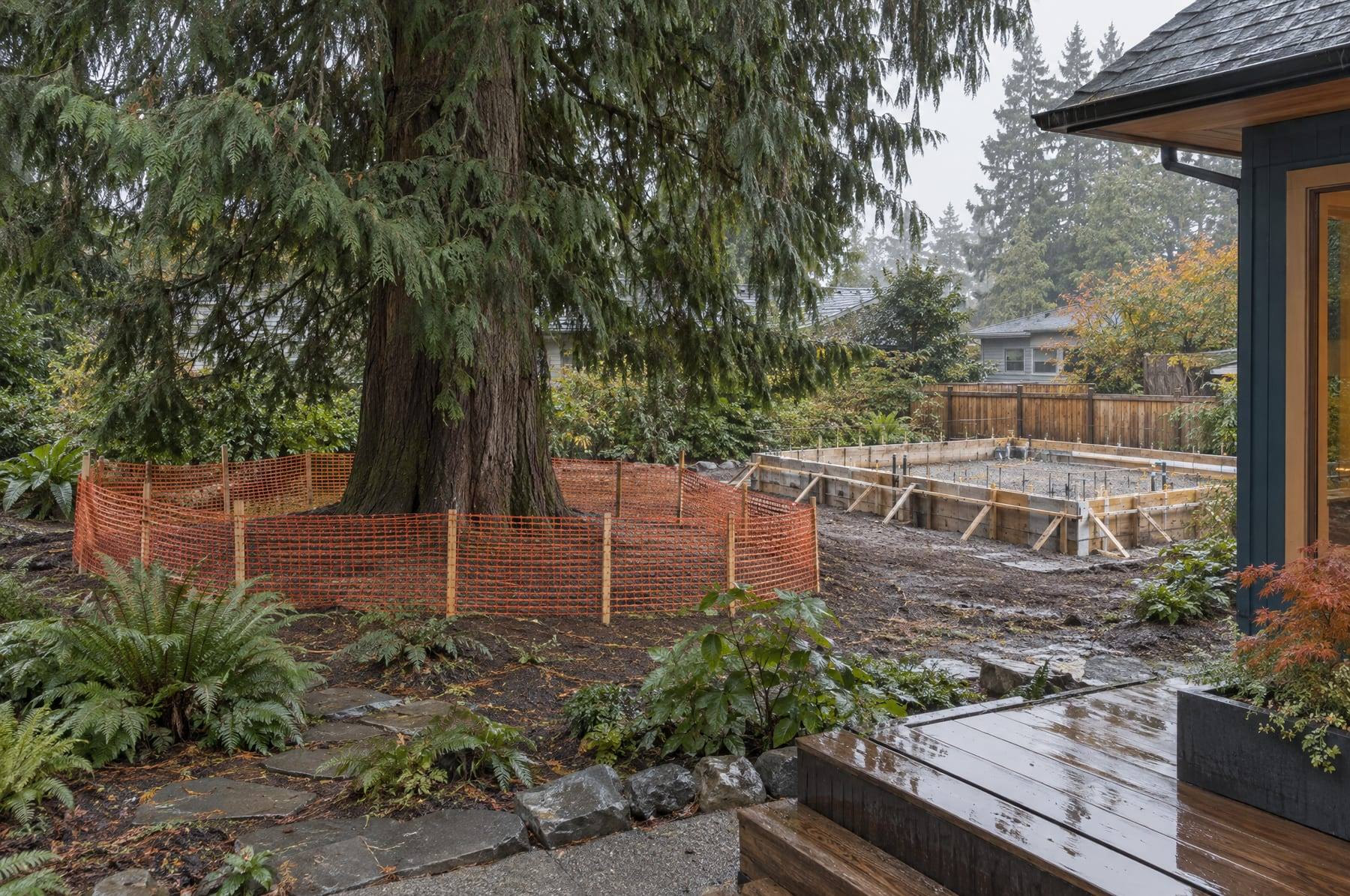
The Seattle ADU rules page works through a 5,000 square foot lot. Trees often decide where a cottage or an addition can go: projects that harm or remove trees the city protects as Tier 1, 2 or 3 cannot use the STFI permit, and the tree rules guide explains the categories.
How do the costs compare?
Remodeling magazine's 2025 Cost vs. Value report prices a defined version of each project for the Seattle market. The figures are averages for that project, not quotes, and they leave out conditions on your lot such as slope, utility runs and trees.
| Project | Job cost | Cost recouped at sale |
|---|---|---|
| Accessory dwelling unit | $210,944 | 32.3% |
| Basement remodel (a finished room with a wet bar and a bathroom, not a rental unit) | $68,358 | 68% |
| Bathroom addition, midrange | $82,218 | 39.7% |
| Primary suite addition, midrange | $219,378 | 27.1% |
| Primary suite addition, upscale | $450,561 | 15.9% |
The report has no figure for a second-story addition or a garage conversion. The recouped share measures resale only; rent from an ADU, or a relative housed for years, is not in it.
Some costs fall only on the ADU routes: King County's sewer capacity charge of $46.01 a month for 15 years ($8,281.80 over the full term), possibly an electrical service change from Seattle City Light, and for a cottage the sewer, water and power lines run across the yard. Sales tax applies to all three, at 10.55% in Seattle for October to December 2026. The ADU cost guide and the ADU cost calculator put numbers on the ADU routes; the remodel cost calculator covers additions.
How do the permits and the energy code differ?
An addition can take the quick route and an ADU cannot. SDCI Tip 316 (updated October 29, 2026) lets ground-level, one-story additions up to 750 square feet use the subject-to-field-inspection (STFI) permit, which the city typically processes within a few working days. It excludes establishing or constructing an ADU or DADU, converting a structure to one, and second-story additions; those go through full plan review.
For a cottage, the pre-approved plan route closes much of the gap. The city's ADUniverse website keeps a gallery of DADU designs approved in advance, and SDCI says that in most cases a permit for one takes 2 to 6 weeks. The plan still has to fit your lot.
| Project | Extra efficiency credits (R406) | Blower door test | Whole-house ventilation |
|---|---|---|---|
| Addition of 150 sq ft or less | Not required | Not required | Not required |
| Addition over 150 and under 500 sq ft | 2.0 credits | Not required | Not required |
| Addition over 500 and under 1,500 sq ft | 5.0 credits | Required | Required |
| New detached ADU under 1,500 sq ft with less than 300 sq ft of windows | 5.0 credits, as a small dwelling unit | Required | Required |
From Seattle Energy Code sections R406.3, R402.4.1.2 and R502.1.1 and Seattle Residential Code section R303.4. The energy code guide explains the credits.
Which option suits the way you will use the space?
- Rental income. Only an ADU can be rented as a separate home, and Seattle's rental registration applies once a tenant moves in.
- A relative who wants independence. A cottage gives the most separation; a basement unit gives a separate home under one roof. Either needs its own kitchen and bathroom to be a dwelling unit.
- More room for your own household. An addition, or a basement finished as part of the house, is simpler: no second kitchen, no capacity charge, and possibly the STFI permit.
- Flexibility later. SDCI says an ADU is not legal until it has been established through a permit, so a room built as part of the house cannot simply be rented out later. An addition planned with its own entrance, kitchen and bathroom can be permitted as an attached ADU from the start.
- Keeping the yard. A basement unit or a second story leaves the yard alone; a cottage and a ground-level addition take part of it.
What else can rule an option out?
- Slopes, creeks and wetlands. Environmentally critical areas reduce the density and coverage a lot may have, and exterior work on such a lot needs SDCI approval to stay on the STFI permit.
- Protected trees. A Tier 1, 2 or 3 tree where the building would go can move or stop a project.
- The sewer and the power. You own your side sewer to the public main, and SDCI notes that an ADU may need electrical service changes from Seattle City Light.
- Buildings close together. The residential code measures fire separation distance to the nearest interior lot line, to the far side of a street or alley, or to an imaginary line between two buildings on the lot. A wall less than 5 feet from that line needs a 1-hour rating, and no openings are allowed within 3 feet, so a cottage close to the house can need rated walls.
- Highways and rail lines. Since January 21, 2026, SMC 23.42.047 has asked that any dwelling unit within 600 feet of an interstate, a highway, a major truck street or a railroad have sound-insulating windows that keep indoor noise at 45 decibels or less, plus cooling and balanced ventilation with MERV 13 filters. Ask SDCI early whether it applies to your unit.
- A house that is already a duplex. Under the city's interpretation of section R302.3, an ADU added to a two-family house takes the building out of the residential code.
Outside Seattle, the state sets the floor. RCW 36.70A.681 requires cities to allow at least two ADUs per lot, bars owner-occupancy rules, and forbids size caps under 1,000 square feet or roof height caps under 24 feet. Each city writes its own code above that floor: see the rules for Bellevue, Kirkland, Redmond and unincorporated King County.
Giant Builders visits, measures the house and the yard, and gives a written, itemized estimate for the option that fits. The ADU and DADU builders and home additions pages describe each kind of project.
Questions people also ask
01Can I build a backyard cottage and a basement unit on the same lot?
02Can an addition be rented out later?
03Do I need an architect for any of these?
04Is a tiny house on wheels an option?
05Which option adds the most value at sale?
Sources
- 01Seattle SDCI: Accessory dwelling units (read Nov 26, 2026)
- 02Seattle SDCI: House additions and remodels (read Nov 26, 2026)
- 03Seattle Ordinance 127376: amends SMC 23.42.022 and adds SMC 23.42.047 (passed Dec. 16, 2025; in effect Jan. 21, 2026) (read Nov 26, 2026)
- 04Seattle OPCD: Summary of updated rules in Neighborhood Residential zones (January 2026) (read Nov 26, 2026)
- 05Seattle SDCI Tip 316: Subject-to-field-inspection permits (updated Oct. 29, 2026) (read Nov 26, 2026)
- 06RCW 36.70A.681: state rules for accessory dwelling units (HB 1337, 2023) (read Nov 26, 2026)
- 07Remodeling magazine: 2025 Cost vs. Value report, Seattle (read Nov 26, 2026)
- 08Remodeling magazine: Cost vs. Value project descriptions (read Nov 26, 2026)
- 09King County: Sewage treatment capacity charge, 2026 rates (read Nov 26, 2026)
- 102021 Seattle Energy Code, residential provisions, chapter 4: sections R402.4.1.2 and R406 (read Nov 26, 2026)
- 112021 Seattle Energy Code, residential provisions, chapter 5: section R502, additions (read Nov 26, 2026)
- 122021 Seattle Residential Code, chapter 3: sections R302.1, R302.3 and R303.4, with interpretations (read Nov 26, 2026)
- 132021 Seattle Residential Code, chapter 2: definition of fire separation distance (read Nov 26, 2026)
- 14Seattle Public Utilities: Side sewer maintenance (read Nov 26, 2026)
Rules, rates and programs change. This article was checked against the sources above on the dates shown. It is general information for homeowners, not legal, tax or engineering advice for a specific property.