
ADU & DADU builders · Seattle & the Eastside
ADU and DADU builders in Seattle
Backyard cottages, basement apartments and garage conversions, designed, permitted and built by one licensed contractor. Seattle rewrote its rules in 2025 and 2026. Here is what your lot can hold now, what it costs and how the work runs.
- WA contractor license
- GIANTBS782RZ
- UBI
- 604991679
- Permits
- Prepared and filed by us
- Workmanship warranty
- 5 years
- Estimate
- Free, in your home, in writing
What we build
Three ways to add a home to your lot
An accessory dwelling unit (ADU) is a second, smaller home on the same lot as a house. It can be inside the house, in a converted garage or in a new building in the yard, which the city calls a DADU.
Backyard cottage (DADU)
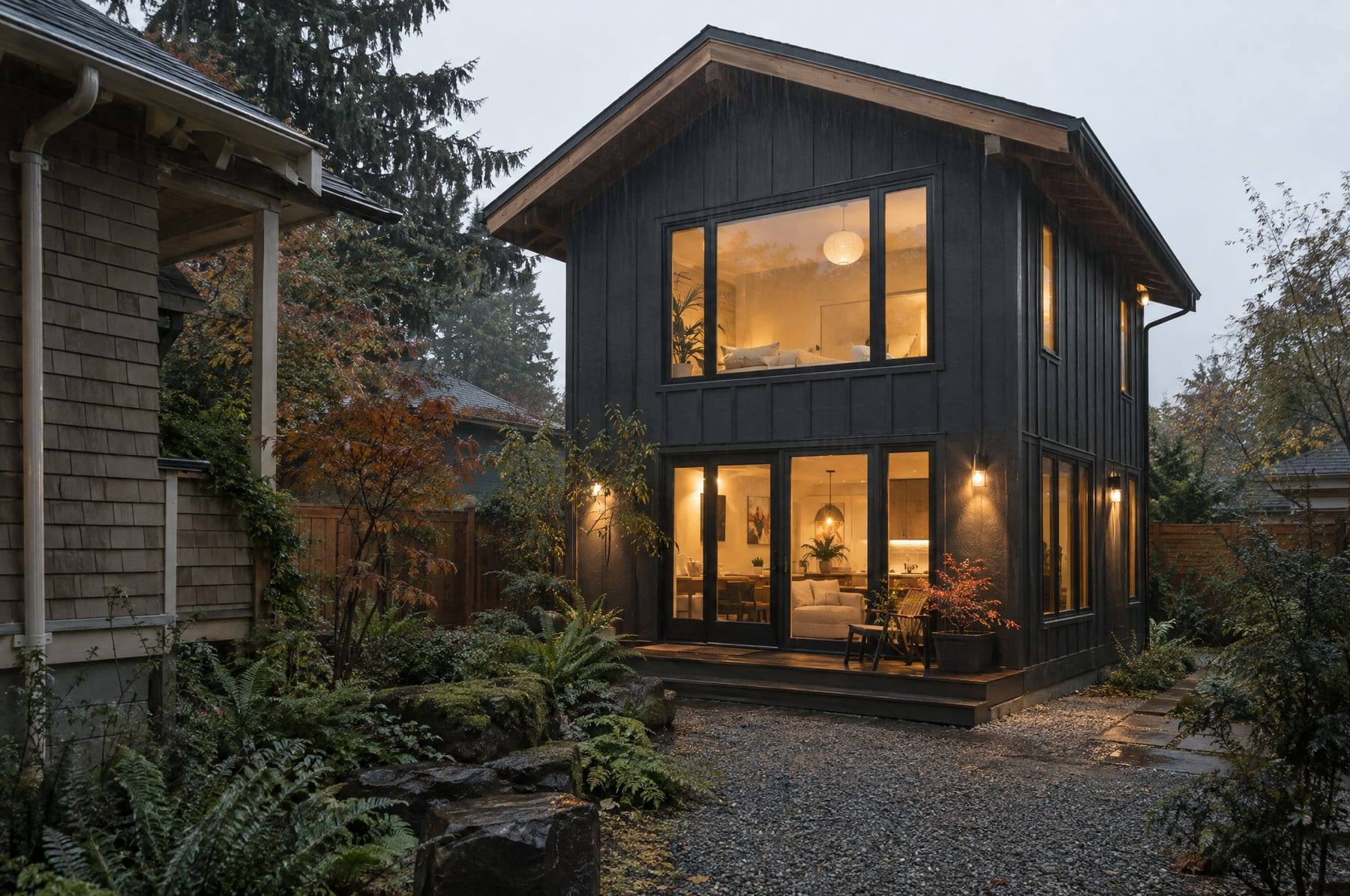
A small detached house in the yard, on its own foundation, with its own kitchen, bathroom and front door. The city calls it a detached accessory dwelling unit.
In-home unit (attached ADU)
A basement or a part of the house turned into a separate home. It uses the walls, the roof and the foundation that are already there, so it is usually the least expensive way to add a unit.
Garage conversion
An existing garage rebuilt as a cottage. Seattle allows this even where the garage sits closer to the property line than a new building could.
Feasibility first
Before any drawing, we check the zone, the lot coverage, the trees, the slope and the route for sewer, water and power, so you know what your lot can hold.
Pre-approved plans
The city keeps a gallery of pre-approved backyard cottage designs. Choosing one can shorten the permit to a few weeks.
Utilities and site work
Sewer and water lines trenched to the new home, a power service sized for it, drainage for the new roof, and a path or stairs to the door.
The rules
Seattle's ADU and DADU rules in 2026
The city changed its accessory dwelling unit rules twice: in 2025, to comply with state law, and again with the Neighborhood Residential update that took effect in January 2026. This is what the code says now.
| Rule | What the code says | Where it is written |
|---|---|---|
| How many | No lot may have more than two accessory dwelling units. They may be attached, detached or stacked. | SMC 23.42.022.C and D |
| Size | Up to 1,000 square feet for a unit with up to two bedrooms. Up to 1,200 square feet for a unit with three or more bedrooms. | SMC 23.42.022.G |
| Not counted in the size | Up to 250 square feet of attached garage, floor area that is underground, and 35 square feet of bicycle parking. | SMC 23.42.022.G |
| Owner occupancy | Not required. State law does not let a city require the owner to live on the lot, and Seattle's code has no such rule. | RCW 36.70A.681(1)(b) |
| Parking | No off-street parking is required for an accessory dwelling unit. | SMC 23.42.022.I |
| Selling | A unit may be sold as a condominium. It may not be separated from the main house by subdivision. | SMC 23.42.022.K; city zoning summary |
| Height | The same as for the main house. In Neighborhood Residential zones that is 32 feet, plus an allowance for a pitched roof. | SMC 23.42.022.E; city zoning summary |
| Rear setback | 5 feet for an accessory dwelling unit, or 0 feet where the lot meets an alley. Front and side setbacks are the same as for the house. | City zoning summary |
| Homes per lot | Accessory dwelling units count toward the number of homes the lot may have: four on most Neighborhood Residential lots, six within a quarter mile of a major transit stop or where at least two homes are affordable. They also count toward the floor area and lot coverage limits. | SMC 23.42.022.J; city zoning summary |
| Converting a garage | A garage or other accessory structure that existed before July 23, 2023 may be converted to a detached unit even where it does not meet today's lot coverage or setback rules. | SMC 23.42.022.H |
| Units in an existing house | An attached unit may be larger than 1,000 square feet when the part of the house it is in existed on July 23, 2023. | SMC 23.42.022.H |
| Sewer capacity charge | King County bills each new unit 0.59 of a standard residential charge: $46.01 a month for 15 years at the 2026 rate. | King County |
Read the ordinances
- Seattle Ordinance 127211, passed May 6, 2025: wrote the new ADU section, SMC 23.42.022, to comply with state law.
- Seattle Ordinance 127376, passed December 16, 2025: updated the Neighborhood Residential zones and amended the ADU section, adding the 1,200 square foot allowance.
- RCW 36.70A.681: the 2023 state law (House Bill 1337) that set the minimum every city’s ADU rules must allow.
For the rules in full, see our Seattle ADU rules guide. Other cities set their own limits: see the guides for Bellevue, Kirkland, Redmond and unincorporated King County.
Cost
What an ADU or DADU costs in Seattle
The price follows the kind of unit more than its finishes. A unit inside the house borrows its structure. A cottage is a new house with every part a house has. The ranges are typical for Seattle in 2026.
Level 01
In-home unit
$120,000 to $250,000
About 3 to 5 months on site
A basement or a part of the house becomes a separate home with its own entrance, kitchen and bathroom.
- Uses the structure that is already there
- Smoke alarms interconnected between the two homes
- May be larger than 1,000 square feet in an existing house
- Plan review by the city
Level 02
Garage conversion
$150,000 to $300,000
About 4 to 6 months on site
An existing garage is rebuilt as a small house, on the spot where it stands today.
- Allowed inside today's setbacks if the garage existed before July 23, 2023
- Floor, walls and roof rebuilt as needed
- Sewer, water and power run to the building
- Plan review by the city
Level 03
New backyard cottage
$250,000 to $500,000
About 6 to 9 months on site
A new detached house in the yard: up to 1,000 square feet, or 1,200 with three or more bedrooms.
- Foundation, framing and every trade, like any new house
- Utilities trenched across the yard
- A pre-approved plan can shorten the permit
- Often 9 to 14 months from first drawing to move-in
Ranges reflect Remodeling magazine’s 2025 Cost vs. Value report, which puts an accessory dwelling unit in Seattle at $210,944, and the ranges Seattle-area contractors published in 2026. Size, the slope of the yard and the distance the utilities have to run move the price most. Sales tax is charged on the full contract in Washington: 10.55% in Seattle. King County bills its sewer capacity charge to the owner separately. Your written estimate is for your lot, not an average. Read the ADU cost guide or try the ADU cost calculator.
Permits
How an ADU is permitted in Seattle
Every accessory dwelling unit, in the house or in the yard, needs a construction addition or alteration permit from the Seattle Department of Construction and Inspections (SDCI). None of them qualifies for the quick subject-to-field-inspection permit, so the plans are reviewed in full.
The pre-approved plan route
The city’s ADUniverse website has a gallery of pre-approved backyard cottage designs and a search tool for checking whether a lot can take one. SDCI says that with one of these plans you can get your permit in 2 to 6 weeks in most cases. The plan still has to fit your lot.
A custom design
A cottage drawn for your lot, a garage conversion or a unit inside the house goes through regular plan review. How long that takes depends on how complete the drawings are and how quickly the city’s corrections are answered.
Other permits and charges
- An electrical permit from SDCI, and often a new or larger power service from Seattle City Light.
- A plumbing permit from Public Health Seattle & King County.
- The King County sewer capacity charge. SDCI reports every ADU permit to the county, and you sign a form acknowledging the charge when you apply.
A unit that already exists without a permit can be made legal with a construction permit that establishes the use.
What we check before design starts
- The zone, the lot size and how much of the lot is already covered
- How many homes the lot has now, since ADUs count toward the limit
- Setbacks, the alley, and where a cottage could sit
- Steep slopes, wet ground and protected trees
- The route for sewer, water and power
- How materials and equipment reach the yard
Inside the unit
What a legal unit needs inside
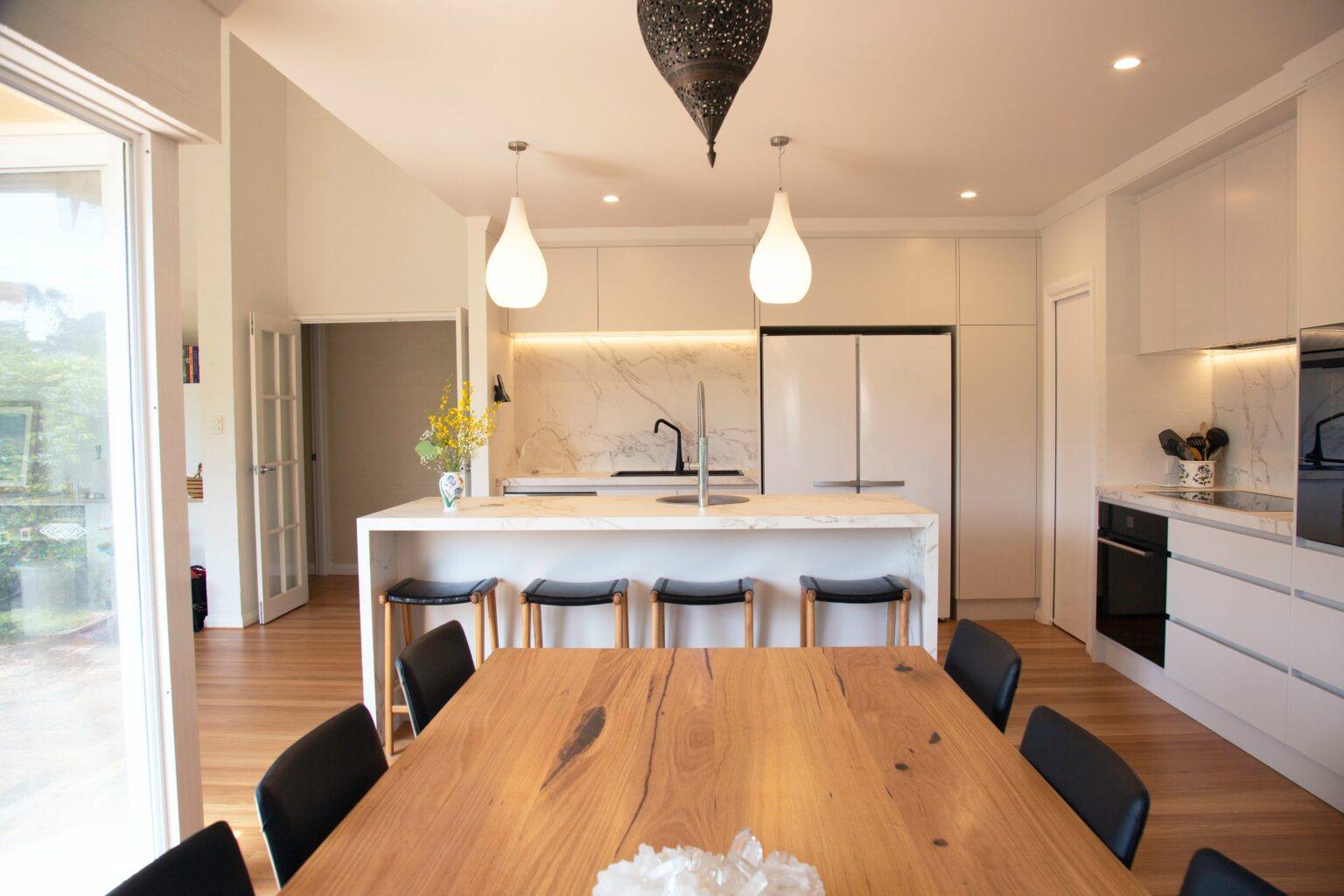
An accessory dwelling unit is a complete home, and it has to meet the same residential, energy and electrical codes as any new house in Seattle. In practice that means:
- A kitchen with a sink, and a bathroom with a toilet, a sink and a tub or shower.
- An emergency escape window or door in every bedroom.
- Smoke alarms and carbon monoxide alarms. When one unit is added inside an existing house, the alarms in both homes are interconnected, and in that case the code does not ask for a fire-rated wall between them.
- Insulation, heating and ventilation to the current energy code, including in a converted garage.
- For a cottage wall closer than 5 feet to an interior lot line, fire-rated construction, with openings limited to a quarter of the wall and none closer than 3 feet. Along an alley, the distance counts to the far side of the alley.
We also plan a separate entrance for each home and, where the lot allows, some private outdoor space, because that is what makes a unit pleasant to live in and easy to rent.
Older lots
What older Seattle lots and houses hide
Most of what decides an ADU project is under the ground or at the edges of the lot. These are the conditions we look for at the feasibility visit.
A sewer line that cannot take more
Side sewers in older neighborhoods are often clay pipe, and some are shared with a neighbor. We ask for a camera inspection before design, because repairing or replacing the line can be a real part of the budget.
A small electrical service
A second home needs enough power of its own. An old, small service to the main house usually means a new or larger service from Seattle City Light.
Trees the city protects
Seattle's tree code limits which trees can be removed from private property and requires replacements. A large tree in the backyard can decide where a cottage sits, or whether it fits.
Slopes and wet ground
Steep slopes, creeks and wetlands are environmentally critical areas. They reduce the number of homes a lot may have, and building near them can require a survey and a soils report.
A garage with no real foundation
Many old garages sit on a thin slab with no footings. The code's definition of a conversion includes removing the structure and rebuilding it in the same place, so a weak garage can still become a cottage.
A basement that is damp or low
For an in-home unit, the basement has to be dry and tall enough to live in: at least 6 feet 8 inches in an existing house. See basement finishing.
Process
How an ADU or DADU project runs
- 01
Feasibility visit
A free visit to look at the house, the yard and the alley, and to check the zoning and the utilities. You hear what your lot can hold before you pay for drawings.
- 02
Design and price
A pre-approved plan or a design drawn for your lot, with a written, itemized price that includes the site work and the utility connections.
- 03
Permits
We prepare and file the building, electrical and plumbing permits and answer the city's corrections until the permit is issued.
- 04
Build
Site work and utilities first, then the foundation, framing, roofing and windows, then the trades and inspections inside, then finishes.
- 05
Walkthrough
We walk the finished home with you and close out every item on the list before we call it done.
Reviews
What homeowners have said
“Leo and team were fantastic! The team completed a full finish of our sub-basement in under 3 weeks”
Jacob M. · Basement finish · June 2024 · on Thumbtack
“Leo and his team did a great job... He did what he promised”
Jacky W. · May 2024 · on Thumbtack
“Leo was on time and listened to our needs... Overall great experience.”
Xinran L. · January 2024 · on Thumbtack
Read every review where it was posted. Counts as of November 18, 2026.
Questions
ADU and DADU questions, answered
01How much does it cost to build a DADU in Seattle?
A new backyard cottage in Seattle typically costs $250,000 to $500,000, depending on its size, the slope of the yard and how far the utilities have to run. Converting an existing garage typically runs $150,000 to $300,000, and a unit inside the house $120,000 to $250,000. For reference, Remodeling magazine's 2025 Cost vs. Value report puts an accessory dwelling unit in Seattle at $210,944. Washington sales tax applies to the whole contract, labor included: 10.55% in Seattle. King County also bills a sewer capacity charge for the new unit.
02How long does it take to build an ADU or DADU?
For a new backyard cottage, 9 to 14 months from the first drawing to move-in is typical: design, then the permit, then about 6 to 9 months of construction. The city says a permit for one of its pre-approved cottage plans takes 2 to 6 weeks in most cases. A custom design goes through regular plan review, which takes longer. A unit inside the house is usually 3 to 5 months of construction once the permit is issued.
03How many ADUs can I build on my lot in Seattle?
Two. Seattle's code says no lot may have more than two accessory dwelling units, and they may be attached, detached or stacked, in any mix. The units count toward the total number of homes the zone allows on the lot, which is four on most Neighborhood Residential lots and six in some locations. A larger lot may hold more homes than that, but only two of them may be ADUs.
04How big can an ADU be?
Up to 1,000 square feet for a unit with up to two bedrooms, and up to 1,200 square feet for a unit with three or more bedrooms. Up to 250 square feet of attached garage, floor area that is underground and 35 square feet of bicycle parking are not counted. A unit inside a part of the house that existed on July 23, 2023 may be larger than 1,000 square feet. Height and setbacks follow the rules for the main house, except that a detached unit may sit 5 feet from the rear lot line, or on the line at an alley.
05Can I rent out my ADU, and do I have to live on the property?
You can rent it, and you do not have to live there. Washington law does not let a city require the owner to live on a lot that has an accessory dwelling unit, and Seattle's code has no owner-occupancy rule. The unit does not need an off-street parking space either.
06Can I sell my DADU separately?
As a condominium, yes. Seattle's code says its land use rules may not be used to block the sale of a condominium unit on the grounds that it was built as an accessory dwelling unit. What you cannot do is split the unit from the main house by subdividing the lot. Setting up a condominium is legal work, so talk to a real estate attorney before you plan around it.
07What is the difference between an ADU and a DADU?
An ADU, or accessory dwelling unit, is a second, smaller home on the same lot as a house. An attached ADU is inside or joined to the house: a basement apartment is the usual example. A DADU is a detached ADU, a separate building in the yard, also called a backyard cottage. Granny flat and mother-in-law unit are everyday names for the same things.
08What is the King County sewer capacity charge?
It is a charge King County bills to newly connected homes to pay for sewage treatment capacity. An accessory dwelling unit, attached or detached, is charged 0.59 of a standard residential unit. At the 2026 rate of $77.99 that is $46.01 a month, billed for 15 years, with the option to pay the balance early. Seattle reports every ADU permit to King County, and the bill goes to the property owner. It is not part of a construction contract.
Free estimate
Find out what your lot can hold
Tell us about your house and yard. We come out, check the lot against the current rules, and send a written, itemized estimate.
Washington general contractor GIANTBS782RZ, registered with the Department of Labor & Industries. The record is public.
Related
Sources
- 01Seattle Ordinance 127211: adds SMC 23.42.022, accessory dwelling units (passed May 6, 2025) (read Nov 18, 2026)
- 02Seattle Ordinance 127376: Neighborhood Residential update, amends SMC 23.42.022 (passed Dec. 16, 2025) (read Nov 18, 2026)
- 03RCW 36.70A.681: state rules for accessory dwelling units (HB 1337, 2023) (read Nov 18, 2026)
- 04Seattle SDCI: Accessory dwelling units (read Nov 18, 2026)
- 05Seattle SDCI Building Connections: New middle housing codes (March 2, 2026) (read Nov 18, 2026)
- 06Seattle OPCD: Summary of updated rules in Neighborhood Residential zones (January 2026) (read Nov 18, 2026)
- 07King County: sewer capacity charge (read Nov 18, 2026)
- 08Seattle SDCI Tip 316: Subject-to-field-inspection permits (read Nov 18, 2026)
- 09Seattle SDCI Tip 116B, dated Aug. 18, 2023 (out of date; cited for that reason) (read Nov 18, 2026)
- 10Seattle Residential Code (2021): sections R302.1, R302.3, R306, R310 and R4404.6 (read Nov 18, 2026)
- 11Seattle SDCI: Electrical permit (read Nov 18, 2026)
- 12Public Health Seattle & King County: plumbing and gas piping permits (read Nov 18, 2026)
- 13Remodeling magazine: 2025 Cost vs. Value report, Seattle (read Nov 18, 2026)
- 14Washington Dept. of Revenue: construction tax matrix (read Nov 18, 2026)
- 15Washington Dept. of Revenue: local sales tax rates, October to December 2026 (read Nov 18, 2026)