
Topic · 6 articles
Basements, ADUs and additions
More living space on the lot you own, built dry, legal and to code.
- 01
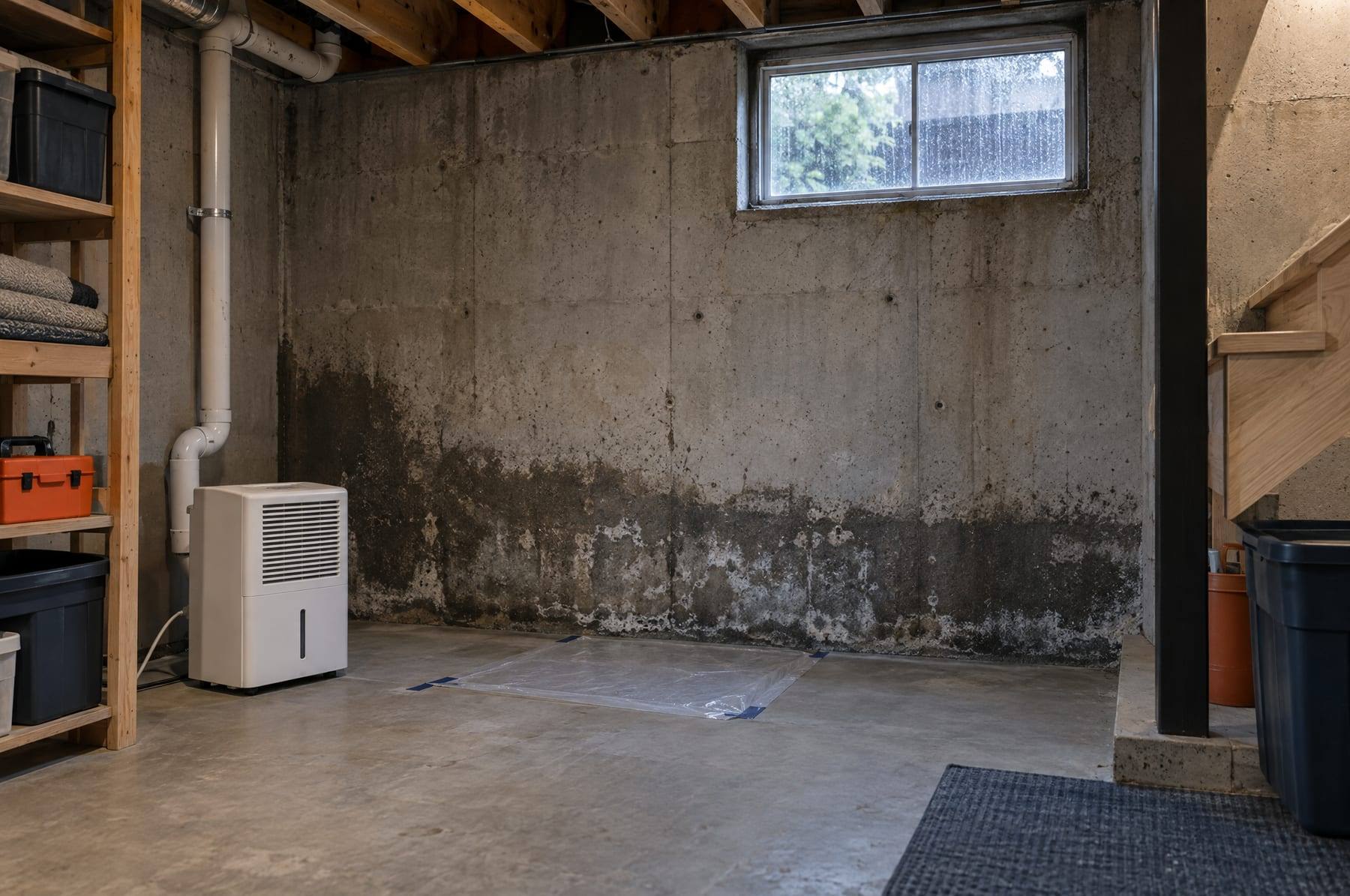 How to Keep a Seattle Basement Dry Before FinishingMost wet Seattle basements are fed by rain. Sea-Tac Airport averages 39.34 inches a year, about three quarters of it from October through March, and the dense glacial till in Seattle-area ground lets water through slowly. Fix the outside first: clean the gutters, carry downspouts at least 5 feet from the foundation and grade the soil to fall 6 inches in the first 10 feet. Then test the slab and walls in wet weather, and insulate against the concrete with foam, since Seattle's code does not require a plastic vapor barrier on basement walls.10 min read
- 02
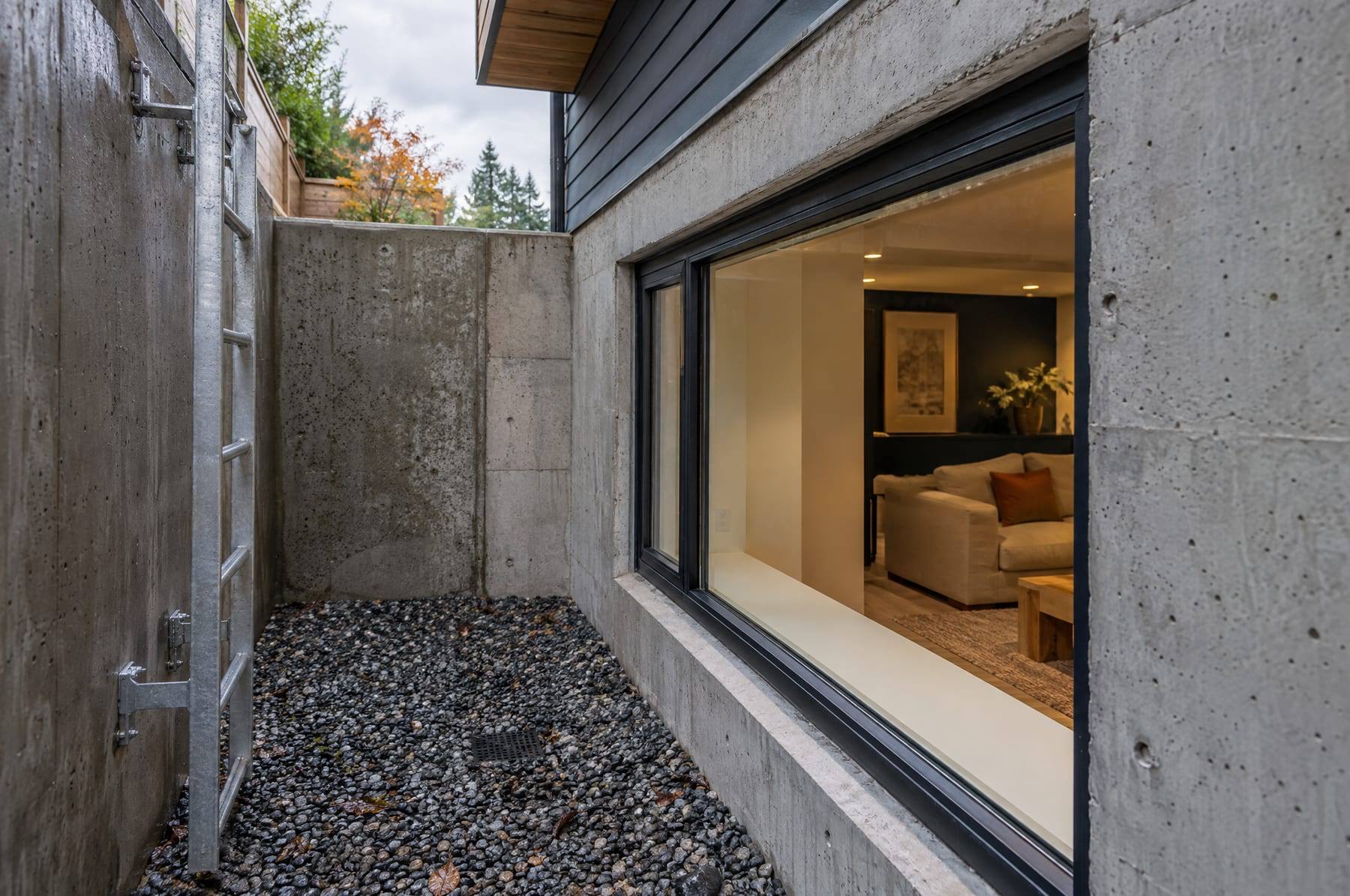 Basement Egress Window Rules in Washington and SeattleEvery new bedroom in a Washington basement needs an emergency escape and rescue opening. Under section R310 of the state residential code, which Seattle enforces with the state's amendments and none of its own, the window or door must give at least 5.7 square feet of clear opening (5 square feet at grade), at least 24 inches high and 20 inches wide, with the bottom no more than 44 inches above the floor. A well below grade must be at least 9 square feet and 36 inches each way.10 min read
- 03
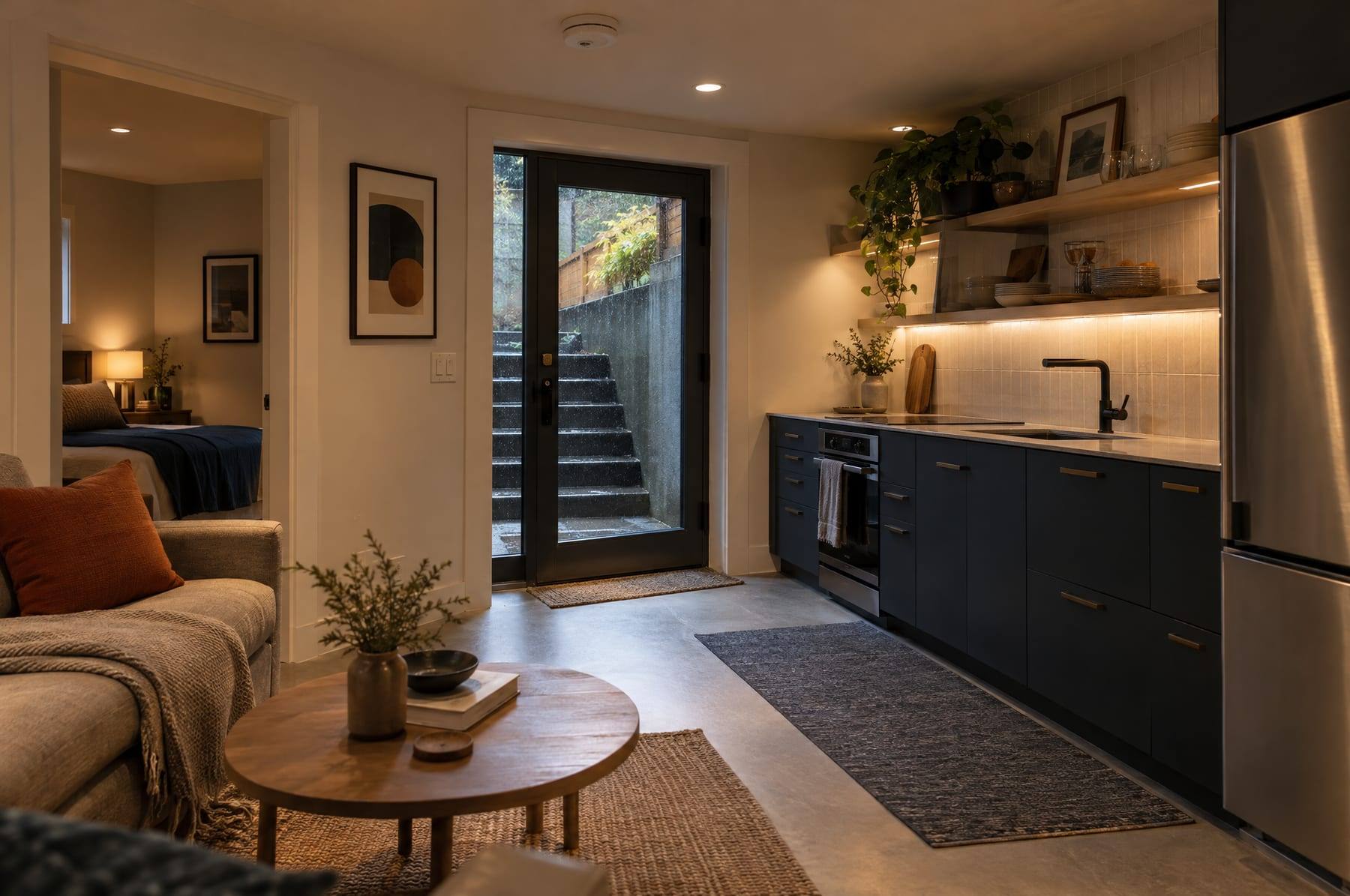 Turning a Basement Into a Legal Apartment in SeattleIn Seattle a basement apartment is an attached accessory dwelling unit, or AADU. A lot may have up to two accessory units, with no parking and no rule that the owner live there, and underground floor area does not count toward the 1,000 square foot limit. The unit needs a construction permit with full plan review, a 6 foot 8 inch ceiling, an escape opening in each bedroom, its own exterior door and smoke alarms interconnected with the house. King County then bills $46.01 a month for 15 years.9 min read
- 04
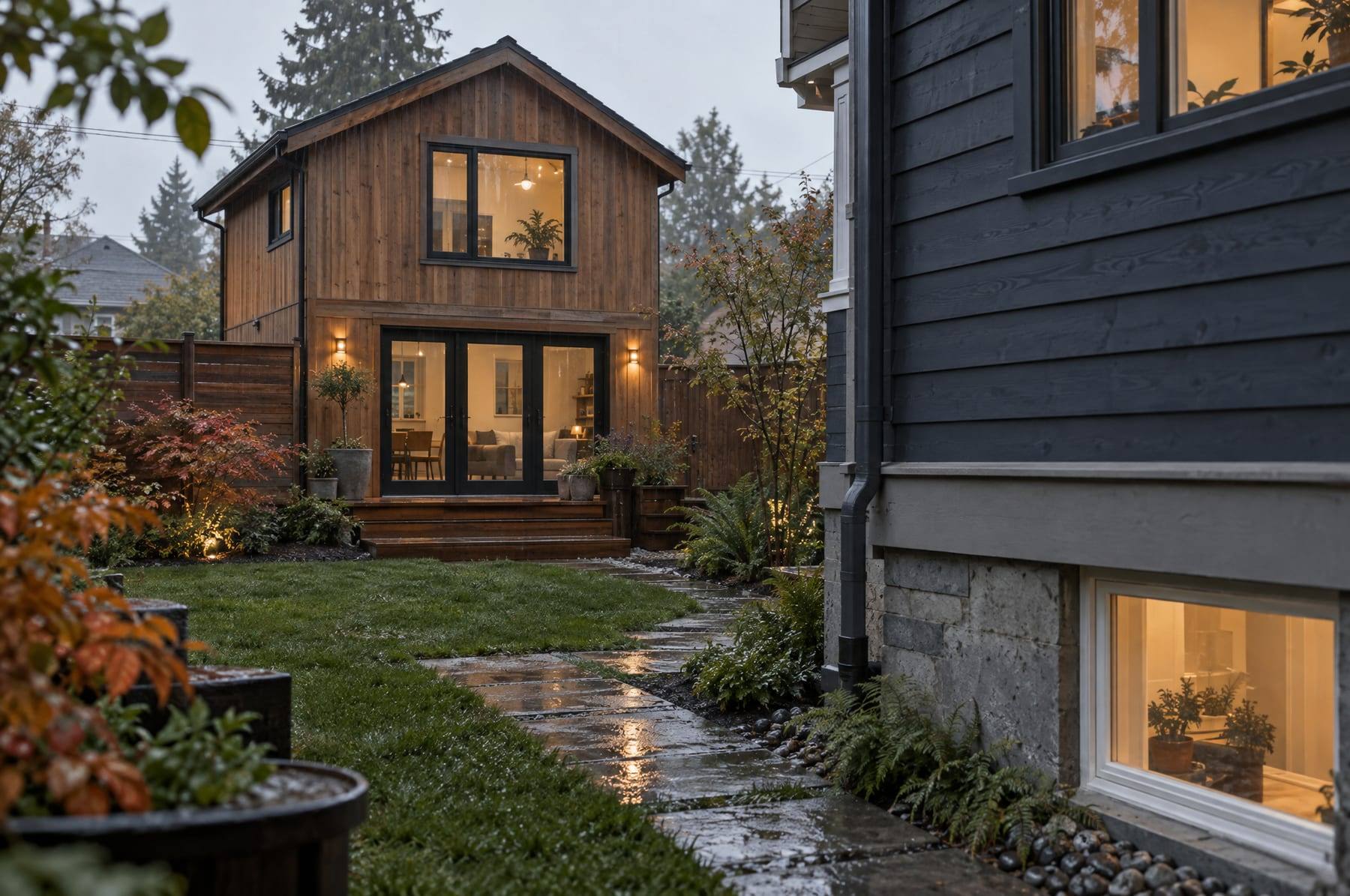 DADU, Basement ADU or Addition: Which Fits Your LotOn a Seattle lot there are three ways to add room. A backyard cottage (DADU) and a basement or attached unit (AADU) are accessory dwelling units: up to two per lot, 1,000 square feet each or 1,200 with three or more bedrooms, no parking, rentable, and permitted with full plan review. An addition enlarges the house itself, and one story at ground level up to 750 square feet can use the quicker STFI permit. Lot coverage of 50 percent, floor area, setbacks and trees decide which fits.9 min read
- 05
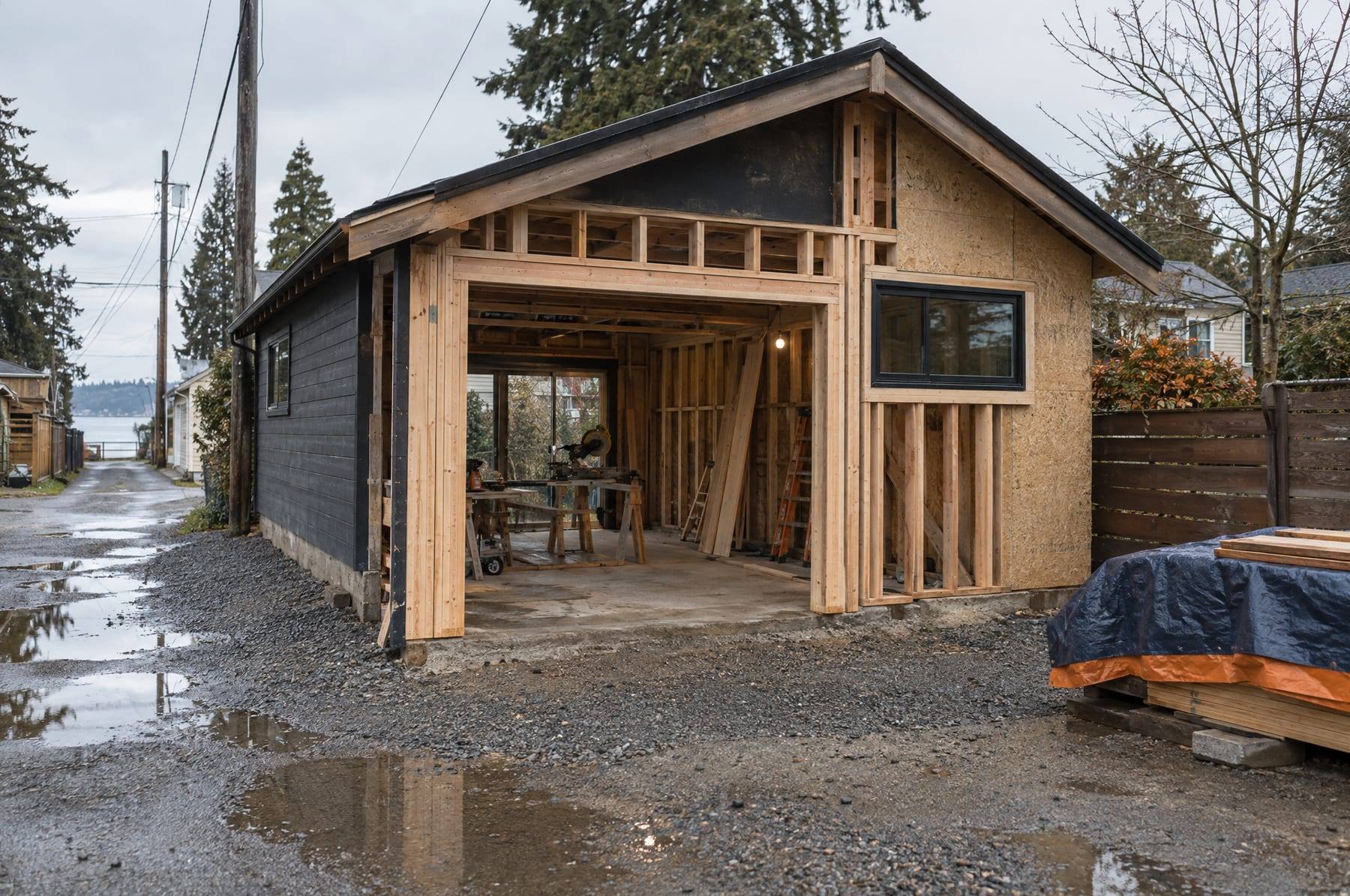 Converting a Garage Into an ADU in SeattleSeattle lets a garage that existed before July 23, 2023 become a detached ADU even where it breaks today's lot coverage, yard or setback rules, and state law requires cities to allow such conversions. The unit may be up to 1,000 square feet, or 1,200 with three or more bedrooms, needs no parking and can be rented. It takes a construction permit with full plan review, the building has to be brought fully up to the energy code, and King County bills $46.01 a month for 15 years.9 min read
- 06
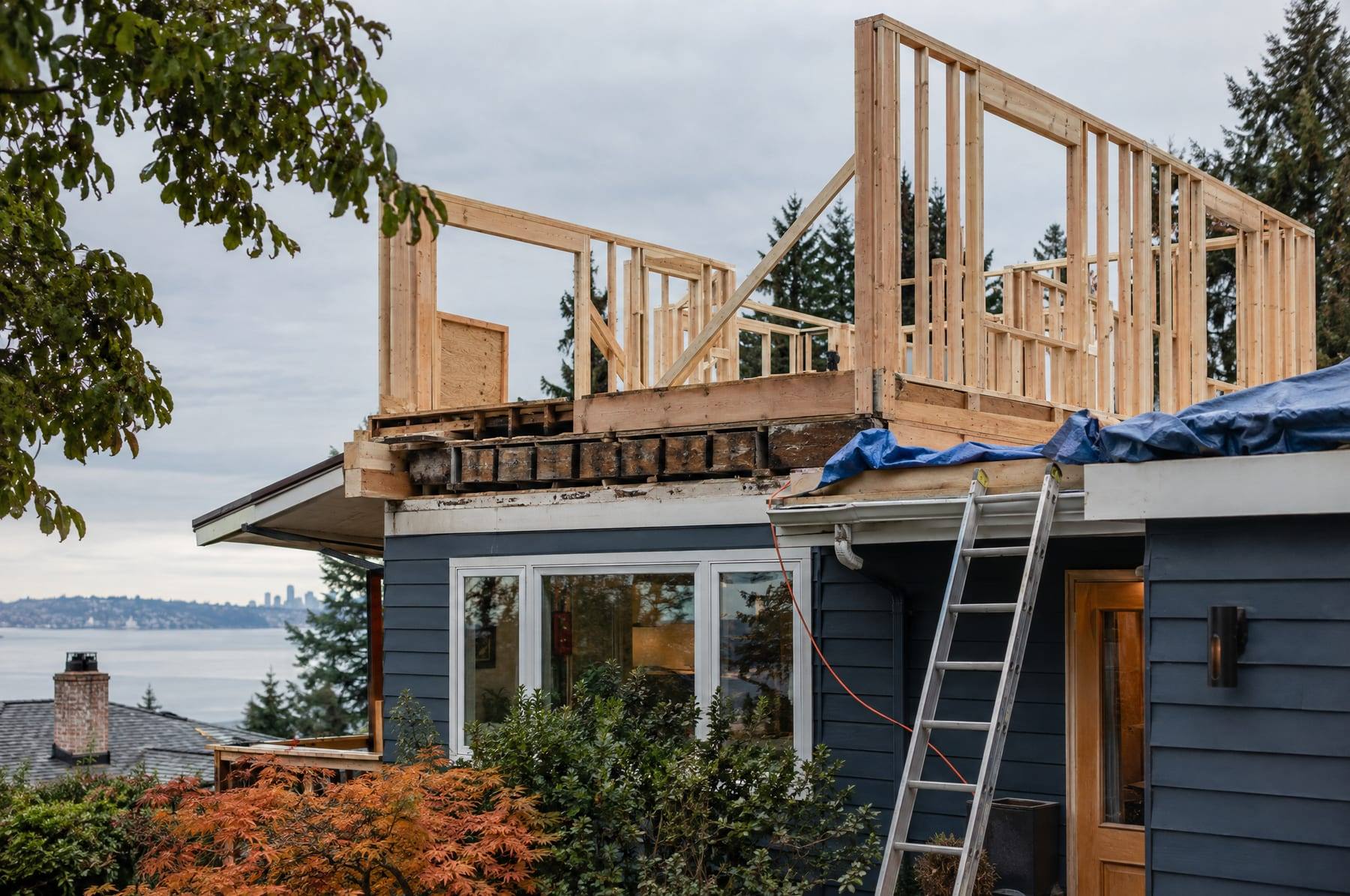 Second Story or Bump-Out: Adding Space in SeattleIn Seattle, building out is usually the simpler permit. A ground-level, one-story addition up to 750 square feet, or a dormer up to 14 feet wide that adds no more than 200 square feet, can use SDCI's subject-to-field-inspection permit. A second story always takes full plan review, and the old house and the new floor together must meet today's structural rules unless an engineering evaluation shows they can carry the load. Building out uses lot coverage, capped at 50 percent; building up uses height, capped at 32 feet plus a roof allowance.10 min read