The short answer
In Seattle a basement apartment is an attached accessory dwelling unit, or AADU. A lot may have up to two accessory units, with no parking and no rule that the owner live there, and underground floor area does not count toward the 1,000 square foot limit. The unit needs a construction permit with full plan review, a 6 foot 8 inch ceiling, an escape opening in each bedroom, its own exterior door and smoke alarms interconnected with the house. King County then bills $46.01 a month for 15 years.
Key points
- 01A basement apartment is an attached ADU: up to two ADUs per Seattle lot, no parking, no owner occupancy, and underground floor area does not count toward the size limit.
- 02It always takes a construction permit with full plan review; Seattle's quick STFI permit excludes creating a dwelling unit.
- 03For one ADU added within an existing single-family house, no fire-rated separation is required if every smoke alarm in both homes is interconnected.
- 04Each unit needs its own exterior egress door and its own heating controls, and return air may not pass from one unit to the other.
- 05After the build come King County's capacity charge of $46.01 a month for 15 years and, once a tenant moves in, Seattle's rental registration.
In this article (6 sections)
- 01Is a basement apartment allowed on my Seattle lot?
- 02What does the building code require inside a basement apartment?
- 03How can you tell whether a basement can become an apartment?
- 04Which permit does a basement apartment need, and how does it run?
- 05What does a basement apartment cost beyond construction?
- 06What changes once the apartment is rented?
Is a basement apartment allowed on my Seattle lot?
On a lot with a house, generally yes. Seattle Municipal Code 23.42.022 allows accessory dwelling units as a housing use in every zone where housing is allowed. A unit inside the house is an attached accessory dwelling unit, which the city writes AADU, and SDCI notes that a unit is not legal until it has been established through a permit.
| Rule | What the code says | Where |
|---|---|---|
| How many | No lot may have more than two accessory dwelling units, attached, detached or stacked | 23.42.022.C and D |
| Size | 1,000 sq ft of gross floor area with up to two bedrooms; 1,200 sq ft with three or more | 23.42.022.G.1 |
| Not counted in the size | Stories or parts of stories that are underground, up to 250 sq ft of attached garage, and up to 35 sq ft of long-term bicycle parking | 23.42.022.G.2 |
| Older houses | An attached unit may exceed 1,000 sq ft if the part of the house it is in existed on July 23, 2023 | 23.42.022.H.4 |
| Parking | No off-street parking required | 23.42.022.I |
| Owner occupancy | Not required; state law bars cities from requiring the owner to live on the lot | RCW 36.70A.681(1)(b) |
| Density | Accessory and principal units count together. In Neighborhood Residential zones a lot may have the greater of four units or one per 1,250 sq ft, or six within a quarter mile of a major transit stop or with two affordable units | 23.42.022.J; city summary |
| Sale | May be sold as a condominium unit; may not be split off by subdivision | 23.42.022.K; city summary |
From the signed text of Ordinance 127376 and the Office of Planning and Community Development's January 2026 summary of the Neighborhood Residential rules. The Seattle ADU rules page has the full table.
If an older permit put an owner-occupancy covenant on your title, SDCI keeps a form to release it.
What does the building code require inside a basement apartment?
A legal unit is a complete home. The residential code defines a dwelling unit as a single unit with complete independent living facilities, including permanent provisions for living, sleeping, eating, cooking and sanitation. In a basement, these are the rules that shape the design:
| Item | Requirement | Section |
|---|---|---|
| Ceiling height | At least 6 ft 8 in where habitable space is created in an existing basement; 6 ft 4 in in bathrooms and laundry rooms and under beams and ducts | R4404.6 |
| Bedrooms | An emergency escape and rescue opening in each new sleeping room | R310.1 and R310.6 |
| Entry door | At least one egress door for each dwelling unit, 32 in clear wide and 78 in clear high, opening directly to a public way or to a yard or court that leads to one | R311.1 and R311.2 |
| Separation from the house | Not required for one ADU added within an existing single-family house if all required smoke alarms in both homes are interconnected | R302.3 and R302.3.1, exception 2 |
| Smoke alarms | Each unit to the standard for new homes, with every alarm in both homes interconnected; listed wireless alarms are allowed | R314.2.2 and R314.4 |
| Carbon monoxide alarms | Outside each sleeping area and on each level | R315.2 and R315.3 |
| Heat | Able to hold 68 degrees F without portable heaters, with heating controls separate from the main house | R303.10 and its interpretation |
| Ducts | Return air from one dwelling unit may not be discharged into another | M1602.2, item 7 |
| Fresh air | Local exhaust and whole-house ventilation as specified in section M1505.4 | R303.4 |
| Rooms | Habitable rooms of at least 70 sq ft and 7 ft in each direction, kitchens excepted | R304 |
A summary of the 2021 Seattle Residential Code/residential-code), chapters 3, 16 and 44, the edition Seattle enforces now. The plans examiner and the inspector apply the code to your house.
The separation exemption covers one unit added within an existing single-family house; a new house built with a unit inside needs 1-hour fire-rated walls and floors between the two homes. The duct rule often reshapes the heating: if the basement shares the house's forced-air furnace today, the system has to be redesigned so that return air stays within each unit and each unit has its own controls.
How can you tell whether a basement can become an apartment?
Measure and look before paying for drawings. Five things decide most basements:
- Height. Slab to the underside of the joists, minus flooring and ceiling, should leave 6 feet 8 inches, and the lowest beam or duct 6 feet 4 inches. Lowering the floor is possible, but it means digging beside the footings.
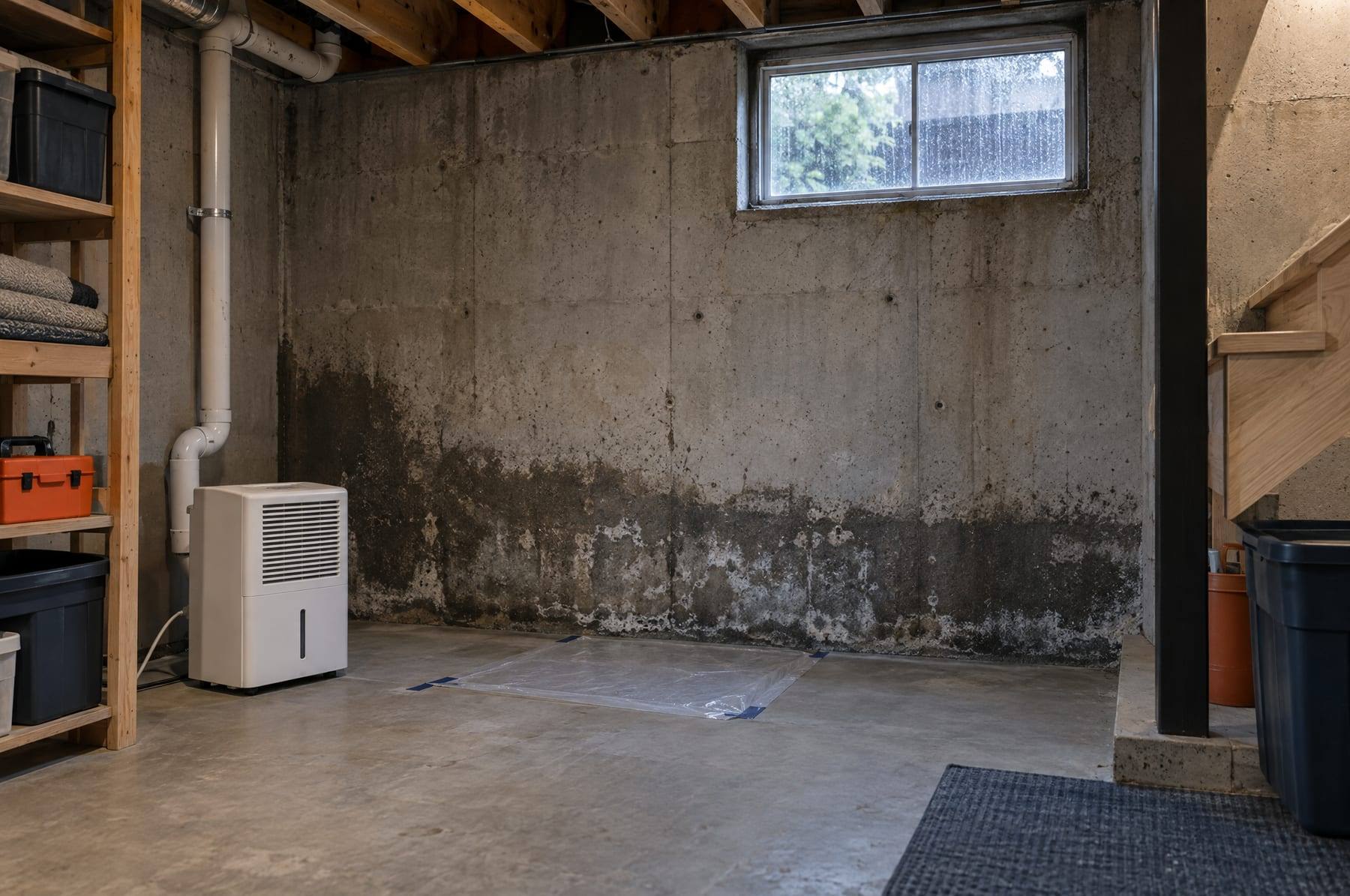
- Water. Stains, efflorescence or a musty smell mean the water work comes first.
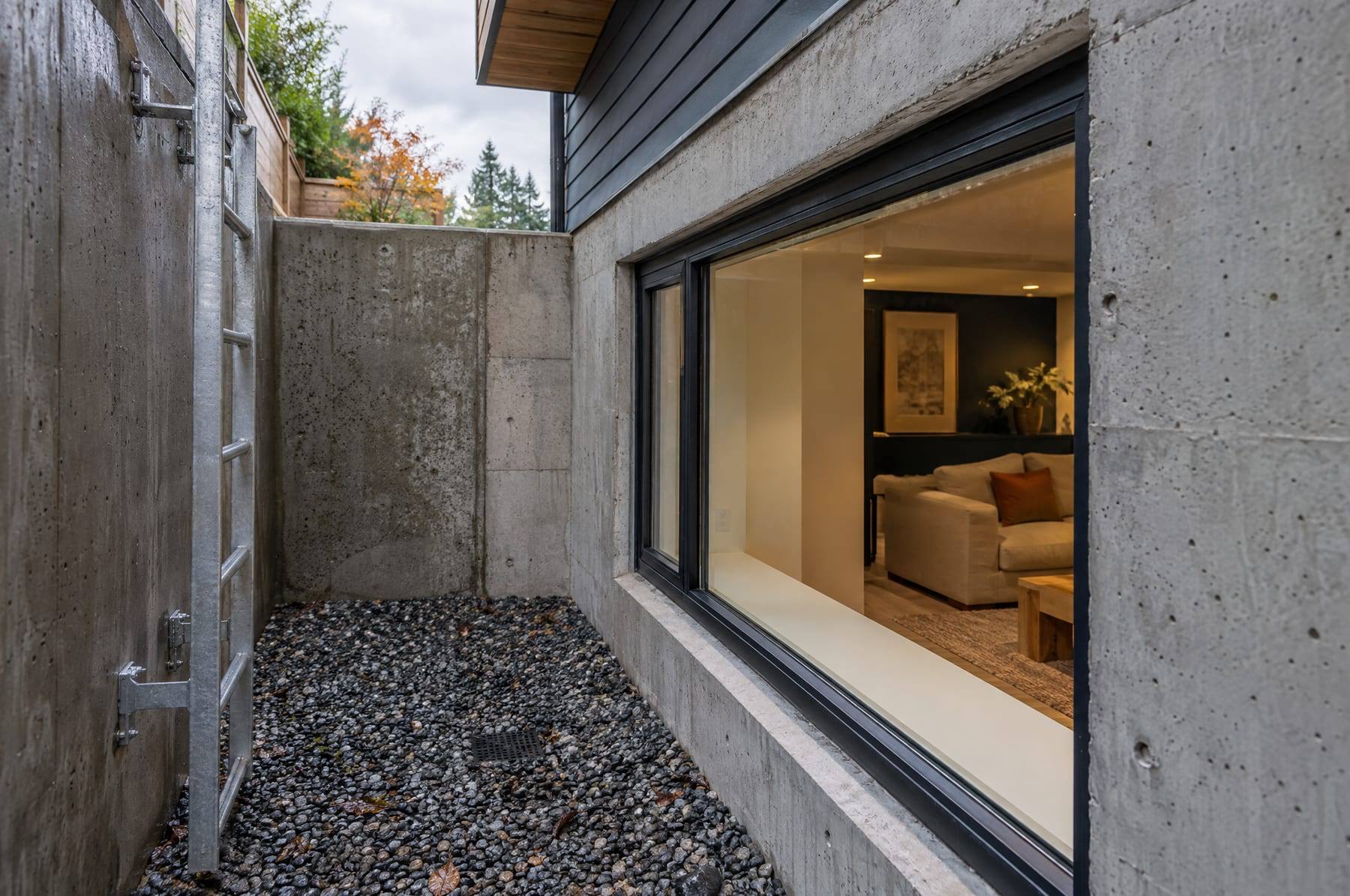
- Escape windows. Each planned bedroom needs a wall where an egress window and well can go.
- A door to the outside. The unit's egress door has to open to a yard or public way, so look for an existing door, room for an exterior stair, or a walk-out side on a sloped lot.
- Plumbing and power. Where the side sewer leaves the house decides whether a basement bathroom drains by gravity or needs a pump, and SDCI notes that an ADU may need electrical service changes from Seattle City Light.
The basement permit guide explains how to measure the ceiling height.
Which permit does a basement apartment need, and how does it run?
A construction addition or alteration permit from SDCI, with full plan review. SDCI Tip 316 lists establishing or constructing an ADU, and changing the number of dwelling units in any building, among the projects that cannot use the quicker STFI permit. An apartment that already exists without a permit is made legal with a construction permit to establish use, and SDCI says an ADU must meet current Seattle residential, building, mechanical, electrical, energy and land use standards, so an old unit is held to the same list as a new one.
- 01
Feasibility
Measure the ceiling, check for water, find the bedroom walls and the exterior door, and confirm the zoning.
- 02
Design
Draw the unit with its door, windows, alarms, heating, ventilation, plumbing and wiring.
- 03
Apply
File the permit and the form SDCI asks for with every ADU application, acknowledging King County's capacity charge.
- 04
Corrections
Answer the plans examiner until the permit is issued. Electrical permits come from SDCI, plumbing permits from Public Health Seattle and King County.
- 05
Build, inspect and register
The work is inspected through to the final inspection; register the rental with the city's RRIO program once a tenant moves in.
Full plan review takes longer than the few working days the city typically needs for an STFI permit; the permit timelines guide covers the review times the city publishes.
What does a basement apartment cost beyond construction?
Construction is the largest number, and four public charges sit around it.
- King County capacity charge for an ADU, per month at the 2026 rate
- $46.01
- King County capacity charge for an ADU, per month at the 2026 rate
- How long the capacity charge is billed
- 15 years
- How long the capacity charge is billed
- Seattle sales tax, October to December 2026, on the whole contract
- 10.55%
- Seattle sales tax, October to December 2026, on the whole contract
- Seattle rental registration for a property, good for 2 years
- $126
- Seattle rental registration for a property, good for 2 years
- King County capacity charge. An ADU, attached or detached, is charged 0.59 of a residential customer equivalent. At the 2026 rate of $77.99 that is $46.01 a month, billed quarterly for 15 years unless the balance is paid off early: $8,281.80 over the full term. SDCI reports every ADU permit to the county.
- Sales tax. Washington's Department of Revenue says sales tax is due on the total contract price of custom construction, labor included. Seattle's combined rate is 10.55% for October 1 to December 31, 2026; the sales tax guide explains the rule.
- Permit fees. SDCI sets the building permit fee from the value of the work, plus plan review and a technology fee. Its 2026 base fee and hourly rate is $292.
- Rental registration. $126 for a property, which includes the first rental unit, plus $31.50 for each additional unit, renewed every two years.
For the construction itself, the closest published Seattle figure is Remodeling magazine's 2025 Cost vs. Value report: $68,358 for a basement remodel with a 20 by 30 foot room, a wet bar and a 5 by 8 foot bathroom. It has no kitchen, no separate entrance and no rental permit, so an apartment costs more. The ADU cost guide has typical ranges by type of unit, and the ADU cost calculator adds the tax and the county charge for your size.
What changes once the apartment is rented?
The city's Rental Registration and Inspection Ordinance (RRIO) applies. Seattle says landlords must register a property as soon as they have a tenant in the rental space, and that a registration is good for two years. When you register, you declare that the unit meets the standards on the city's RRIO checklist, and you post the certificate in a common area or give a copy to each tenant. Registered properties are selected for an inspection at least once every 5 to 10 years. Since January 2019 the program has also covered short-term rentals that are not owner occupied.
Renting brings landlord-tenant law with it. For questions about a lease, or about selling the unit as a condominium, talk to a real estate attorney before you sign anything.
Giant Builders measures, checks for water and looks for the door and window walls at a free in-home estimate, then prepares and files the permits for the unit. The ADU and DADU builders page describes how an in-home unit is planned and built.
Questions people also ask
01Do I have to live in the house to rent the basement apartment?
02Can the apartment share the furnace with the house?
03Does a basement apartment need a fire-rated ceiling?
04Can I sell the basement apartment separately?
Sources
- 01Seattle Ordinance 127376: amends SMC 23.42.022, accessory dwelling units (passed Dec. 16, 2025; in effect Jan. 21, 2026) (read Nov 26, 2026)
- 02RCW 36.70A.681: state rules for accessory dwelling units (HB 1337, 2023) (read Nov 26, 2026)
- 03Seattle SDCI: Accessory dwelling units (read Nov 26, 2026)
- 04Seattle OPCD: Summary of updated rules in Neighborhood Residential zones (January 2026) (read Nov 26, 2026)
- 052021 Seattle Residential Code, chapter 2: definition of dwelling unit (read Nov 26, 2026)
- 062021 Seattle Residential Code, chapter 3: sections R302.3, R303, R304, R310, R311, R314 and R315, with interpretations (read Nov 26, 2026)
- 072021 Seattle Residential Code, chapter 16: section M1602.2, return air (read Nov 26, 2026)
- 082021 Seattle Residential Code, chapter 44: section R4404.6, ceiling height in existing buildings (read Nov 26, 2026)
- 09Seattle SDCI: Residential code scope (one- and two-family houses) (read Nov 26, 2026)
- 10Seattle SDCI Tip 316: Subject-to-field-inspection permits (updated Oct. 29, 2026) (read Nov 26, 2026)
- 11Seattle SDCI: 2026 Fee Subtitle, SMC 22.900B.010 base fee and hourly rate (effective Jan. 1, 2026) (read Nov 26, 2026)
- 12King County: Sewage treatment capacity charge, 2026 rates (read Nov 26, 2026)
- 13Seattle SDCI: Rental Registration and Inspection Ordinance, owners and managers (read Nov 26, 2026)
- 14Washington Dept. of Revenue: construction tax matrix (read Nov 26, 2026)
- 15Washington Dept. of Revenue: local sales and use tax rates, October 1 to December 31, 2026 (read Nov 26, 2026)
- 16Remodeling magazine: 2025 Cost vs. Value report, Seattle, and project descriptions (read Nov 26, 2026)
Rules, rates and programs change. This article was checked against the sources above on the dates shown. It is general information for homeowners, not legal, tax or engineering advice for a specific property.