The short answer
A change order is a written amendment to a remodeling contract that changes the work, the price or the schedule. In Washington, L&I advises that the contract spell out how changes are handled and that every change in materials or scope be put in writing. Changes come from late decisions, conditions found behind walls and inspector requirements. In Seattle, a change to approved plans may need a permit revision, which costs at least one hour of review ($292 in 2026), and sales tax applies to the added price.
Key points
- 01A change order should be written, priced and signed before the changed work is done, as L&I advises.
- 02Most change orders trace back to late decisions, allowances that run over, hidden conditions, code requirements or gaps in the scope.
- 03On Seattle's STFI permit, the inspector can require changes on site to meet the code, so a design that already meets current code avoids them.
- 04A change to approved plans in Seattle may need a permit revision, with at least one hour of review at $292 and an initial review target of two weeks.
- 05Washington sales tax applies to the full contract price, so every change order carries tax at the job site's rate.
In this article (8 sections)
- 01What is a change order?
- 02Why do change orders happen?
- 03What hidden conditions cause change orders in older Seattle houses?
- 04Can the inspector require changes during the job?
- 05What should a written change order include?
- 06Does a change need a new permit or a permit revision?
- 07How do you keep change orders small?
- 08What if you disagree about a change order?
What is a change order?
A change order is a short written agreement, signed by you and the contractor, that changes the contract after it is signed. It says what work is added, removed or changed, what that does to the price and what it does to the schedule. Washington's Department of Labor & Industries (L&I) lists the change order process among the terms a complete remodeling contract should include, and advises getting any change in materials or scope in writing and avoiding verbal agreements.
A change order does not mean something went wrong. On a remodel of an older house, some are expected. What matters is that each one is written, priced and agreed before the work is done, and that the contract already says how that will happen.
Why do change orders happen?
Nearly every change order comes from one of five causes. The table shows each one and what keeps it small.
| Cause | Example | What keeps it small |
|---|---|---|
| A decision changed after signing | A different tile, an added outlet, a moved island | Finish the design and the selections before the contract is signed |
| An allowance ran over | The tile allowance was $3,000 and the tile chosen costs $4,800 | Choose items before signing, or set allowances from real prices |
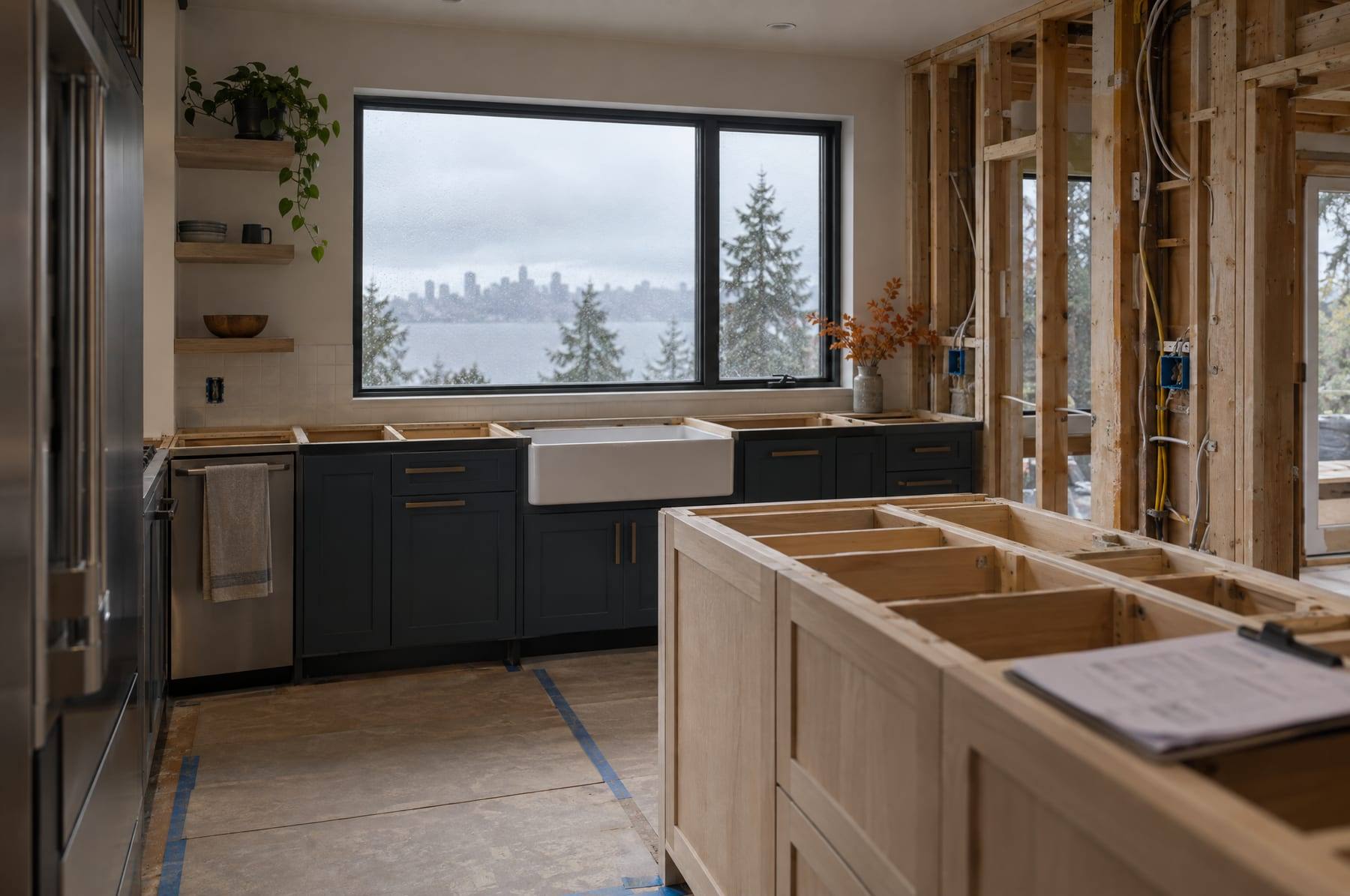
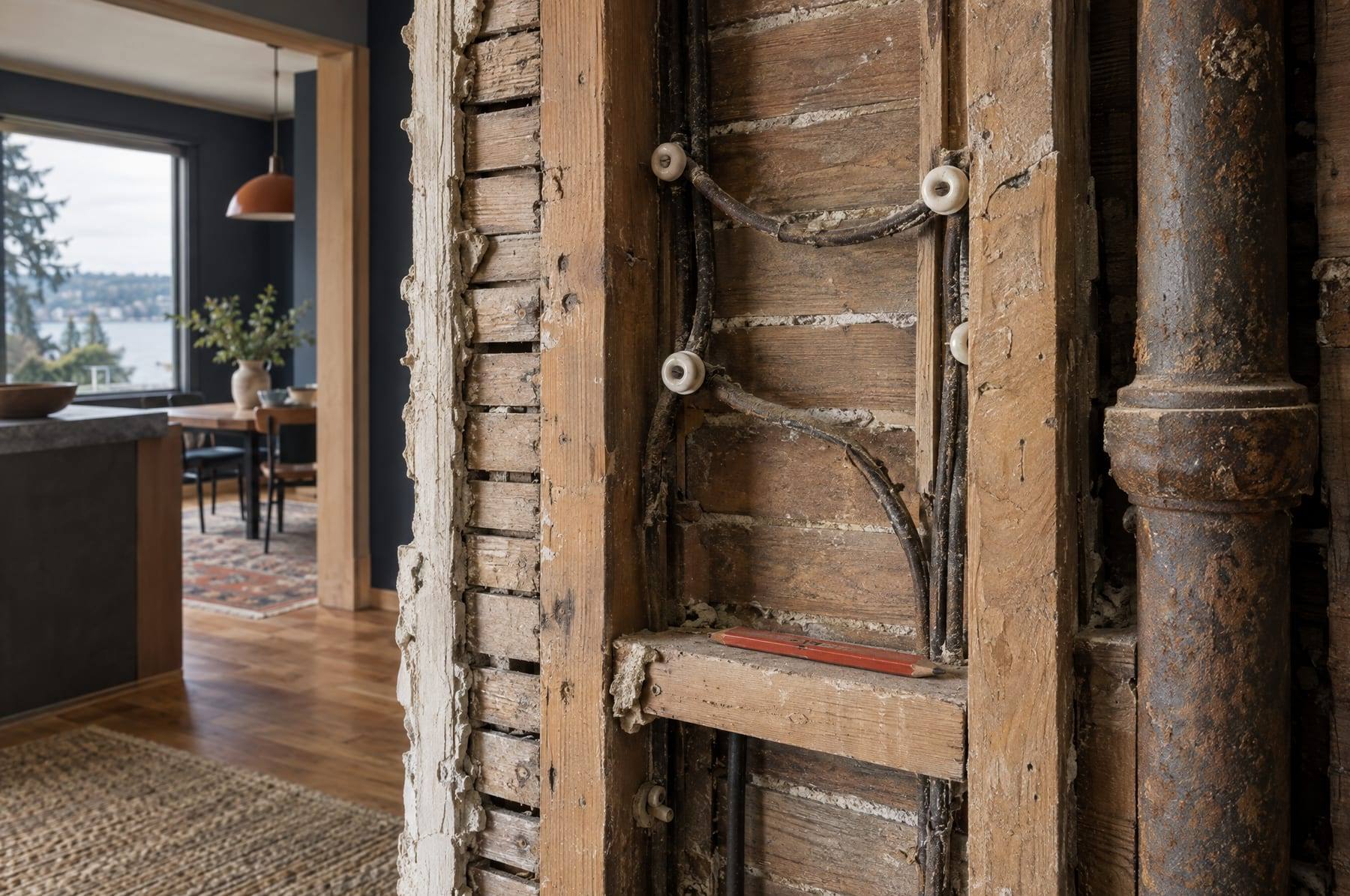
| A condition hidden behind a wall or floor | Old wiring, rotted framing at a shower, a cracked drain line | Look and test before pricing: small openings, the attic, the crawl space, the asbestos survey |
| A code or inspector requirement | New windows that miss the energy code, smoke and carbon monoxide alarms, a beam that needs engineering | Design to current code from the start and ask what the permit will bring with it |
| A gap in the drawings or the scope | Nobody priced the trim, the patching or the paint in the next room | An itemized scope that names what is included and what is not |
The first two causes are decisions you make. The last three are found by looking harder before the price is set, which is why a careful estimate is the cheapest way to avoid change orders. The estimate guide shows what an itemized scope looks like.
Can the inspector require changes during the job?
Yes. On Seattle's subject-to-field-inspection (STFI) permit, the quicker permit most kitchens and bathrooms use, the Seattle Department of Construction and Inspections (SDCI) does not do a full code review of the plans before it issues the permit. The applicant signs a statement acknowledging that, and SDCI's Tip 316 says the building or mechanical inspector "can require you to make any changes to comply with the applicable codes." Its own example is new windows that do not meet the energy code, which have to be removed or replaced.
A permit can also bring work you did not plan. In Seattle, when an alteration needs a permit, the house must have smoke alarms as required for new homes (battery alarms are allowed for this), and carbon monoxide alarms are checked at inspection, under Seattle Residential Code R314.2.2 and R315.2.2. SDCI says you do not have to upgrade parts of the house you are not remodeling, but any structural effect of the new work has to be accounted for in the design.
Code-driven changes are the hardest to argue with, so the best defense is a design and an estimate that already meet current code. Ask the contractor before you sign what your permit will bring with it. The kitchen permit guide lists what a Seattle kitchen permit typically adds.
What should a written change order include?
Enough that someone reading it a year later knows exactly what was agreed. Check for each of these before you sign one.
- A number and a date, so change orders can be listed in order
- What is added, removed or changed, in plain words, with its location in the house
- The price of the change, with labor and materials shown where that helps, and the sales tax
- Any credit for work that is no longer needed
- The effect on the schedule, in days
- Whether the change affects the permit, and who handles a revision
- When the change is paid: with the next scheduled payment or on completion
- Both signatures, before the work is done
Washington sales tax is due on the total contract price for custom work on a home, labor included, so a change order carries tax too. At Seattle's 10.55% rate for October 1 to December 31, 2026, a $4,000 change adds $422 of tax. The rule is explained in why Washington charges sales tax on remodeling labor.
Does a change need a new permit or a permit revision?
Sometimes. SDCI says that when you change the approved work during construction, you must first get approval. The building inspector may approve changes that do not reduce the structure's strength or cause fire and life safety issues, and will tell you if the approved plans need a revision.
| Item | What SDCI says |
|---|---|
| Small changes | The inspector may approve changes that do not reduce strength or cause fire and life safety issues |
| Minor revision | A post-permit submittal: a summary letter, the revised sheets with the changes clouded, and new structural calculations if needed |
| Major revision | Reapply for a new permit. Examples include a substantial change in scale or structural design, moving the structure to a new layout on the site, or a totally new design |
| Fee | One hour of review time when you submit, at $292 an hour in 2026, plus any further hourly review fees |
| Time | SDCI tries to finish the initial review within two weeks |
| Deadline | Revisions can be submitted only while the permit has not expired or been finaled |
SDCI's advice is to talk to the building inspector about a change before making it, so the project is not held up waiting for drawings and approval. Outside Seattle, each city has its own process; the local remodel guides list each permit office.
How do you keep change orders small?
- 01
Decide before you sign
Choose the layout, the fixtures, the tile and the appliances before the contract, so the price is for what you will actually build.
- 02
Look behind the walls
In an older house, ask for small openings, a look in the attic and the crawl space, and the asbestos survey before the final price.
- 03
Set honest allowances
Where something is not chosen yet, set its allowance from real prices for the quality you want.
- 04
Write the rules into the contract
How changes are priced (a fixed price per change, or cost plus a stated markup), who may approve them, and how fast you will answer. L&I also advises agreeing in writing, before work begins, how cost overruns and cleanup will be handled.
- 05
Keep a reserve
Set aside money outside the contract for what the house turns up. How much depends on how much of the house is unknown; the budget guide covers it.
- 06
Change things on paper, not on site
Moving a wall on the drawings costs little. Moving it after framing means a change order and possibly a permit revision.
- 07
Put every change in writing
No verbal agreements, as L&I advises. Keep each signed change order with the contract, the permits and the receipts.
What if you disagree about a change order?
Go back to the contract. If it says how changes are priced and approved, most disagreements come down to whether that process was followed, and the signed change orders are the record. If the contract is silent, the dispute is still a contract matter: the Washington Attorney General's office says contractor disputes are mainly resolved through private legal action, and that it can investigate violations of the Consumer Protection Act but cannot act as your private attorney.
Before holding back money owed for completed work over one disputed change, get advice, because the contract and Washington's lien law both bear on what happens next. For a large dispute, talk to an attorney. L&I's Homeowner Recovery Fund can pay owner-occupants up to $25,000 per claim after a court judgment against a registered contractor.
Giant Builders Seattle gives a written, itemized estimate, and one project manager is the contact for every change during the job.
Questions people also ask
01Is it normal to have change orders on a remodel?
02Can a contractor charge for a change I never signed?
03Do change orders change the sales tax?
04What is the difference between an allowance and a change order?
05Should I pay for change orders as they happen?
Sources
- 01Washington L&I: Hire smart, step by step (read Nov 26, 2026)
- 02Washington L&I: ProtectMyHome tips for hiring a contractor (read Nov 26, 2026)
- 03Washington L&I: Homeowner Recovery Fund (read Nov 26, 2026)
- 04Seattle SDCI: Building permit revisions (read Nov 26, 2026)
- 05Seattle SDCI: 2026 Fee Subtitle, SMC 22.900B.010 (base fee and hourly rate) (read Nov 26, 2026)
- 06Seattle SDCI Tip 316: Subject-to-field-inspection permits (updated Oct. 29, 2026) (read Nov 26, 2026)
- 07Seattle SDCI: Construction permit, subject to field inspection (read Nov 26, 2026)
- 082021 Seattle Residential Code, chapter 3 (R314.2.2 smoke alarms, R315.2.2 carbon monoxide alarms) (read Nov 26, 2026)
- 09Seattle SDCI: House additions and remodels (read Nov 26, 2026)
- 10Puget Sound Clean Air Agency: asbestos rules for contractor renovation (read Nov 26, 2026)
- 11U.S. EPA: Lead Renovation, Repair and Painting program (read Nov 26, 2026)
- 12Washington Dept. of Revenue: construction tax matrix (read Nov 26, 2026)
- 13Washington Dept. of Revenue: local sales and use tax rates, October 1 to December 31, 2026 (read Nov 26, 2026)
- 14Washington Attorney General: Contractors (read Nov 26, 2026)
Rules, rates and programs change. This article was checked against the sources above on the dates shown. It is general information for homeowners, not legal, tax or engineering advice for a specific property.