The short answer
A remodel needs a bigger electrical service only when a load calculation under Article 220 of the National Electrical Code shows the existing one cannot carry the new equipment. One method uses a year of the utility's peak demand data plus 25%; another totals the house's loads. In Seattle a service change needs an SDCI electrical permit ($292 for 150 to 200 amps, plus other fees) and an application to Seattle City Light, which estimates 2 weeks to process it, 16 weeks for design and 10 weeks to connect a simple overhead upgrade.
Key points
- 01Your service capacity is the lowest of three ratings: the service conductors, the panel and the main breaker.
- 02A load calculation decides, not the number of breakers: the metered method takes a year's peak demand times 1.25 and adds the new loads.
- 03Energy management equipment and circuit-sharing devices can sometimes avoid an upgrade; Seattle lets an energy management setpoint count for an existing service.
- 04A Seattle service upgrade needs an SDCI permit and a City Light application; City Light's estimates for the three phases of a simple upgrade total 28 weeks.
- 05The federal tax credit for panels ended with 2025; the state HEAR program covers panel work for households at or below 150% of area median income.
In this article (8 sections)
- 01How do I find out how big my electrical service is?
- 02How do electricians decide whether the panel is big enough?
- 03Which remodel projects add the most load?
- 04Can I avoid upgrading the service?
- 05What are the steps for a service upgrade in Seattle?
- 06What does the Seattle electrical permit cost?
- 07How does a service upgrade work outside Seattle?
- 08Are there rebates or tax credits for a panel upgrade in 2026?
How do I find out how big my electrical service is?
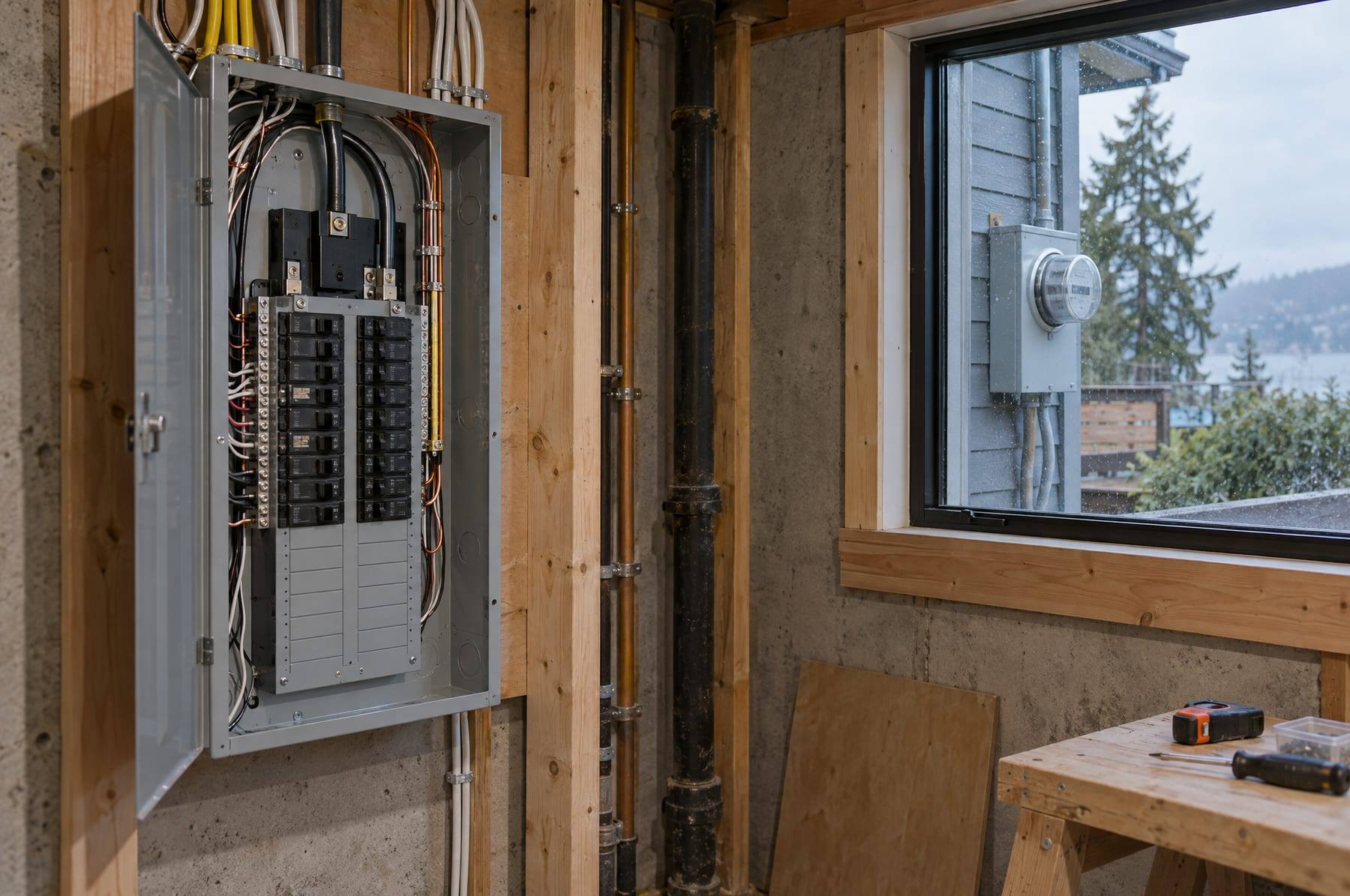
Check three ratings and take the lowest. HUD's inspection guide says a building's service capacity is the lowest of the ampacity of the service entrance conductors, the ampere rating on the panel or service disconnect, and the rating of the main breaker or main fuses. If the main breaker is rated higher than the other two, the guide says the system should not be used until an electrician has evaluated it.
A Department of Energy fact sheet says to look for an amperage label on the utility's meter box and on the panel, and at the size of the main breaker. It notes that the National Electrical Code requires a service of at least 100 amps, that 100-amp panels are common in older homes that have not had a major renovation, and that 150 or 200 amps is typical in newer homes. Seattle City Light adds that a past City Light service letter, or the nameplates on the service equipment, can show your service size.
City Light's own definitions help: the electrical service is what brings electricity from the grid into the house; the panel is the metal box of circuit breakers that controls the flow to the circuits; capacity is the most a service or panel can handle; and load is what the connected equipment uses.
How do electricians decide whether the panel is big enough?
With a load calculation under Article 220 of the National Electrical Code, which both Washington's electrical rules and the Seattle Electrical Code use in their 2023 editions. Two methods are common for an existing house.
| Question | Metered load (NEC 220.87) | Connected load (NEC 220.83) |
|---|---|---|
| What it starts from | The highest demand in a year of the utility's data | The house's floor area and the nameplates of its fixed appliances |
| How it is figured | Peak demand times 1.25, then new loads added at full nameplate rating | 3 volt-amperes per square foot for lighting and outlets, 1,500 for each kitchen and laundry circuit, plus appliance nameplates; the first 8,000 at 100% and the rest at 40%, plus heating or cooling |
| Best for | Adding one or two loads, or adding loads over time | Adding many loads, or when good meter data is not available |
Department of Energy fact sheet on home electrification and panel upgrades; Lawrence Berkeley National Laboratory summary of the 2023 NEC.
Lawrence Berkeley National Laboratory gives a worked example of the metered method: a 100-amp service at 240 volts carries 24,000 watts. If the house's measured peak is 4,000 watts, that times 1.25 is 5,000 watts, which leaves 19,000 watts of nameplate rating for new equipment.
City Light says to hire a certified electrical consultant for this load study before adding load, and that City Light does not provide load studies. The DOE fact sheet adds that a panel can run out of physical room for breakers before it runs out of electrical capacity, or the reverse.
Which remodel projects add the most load?
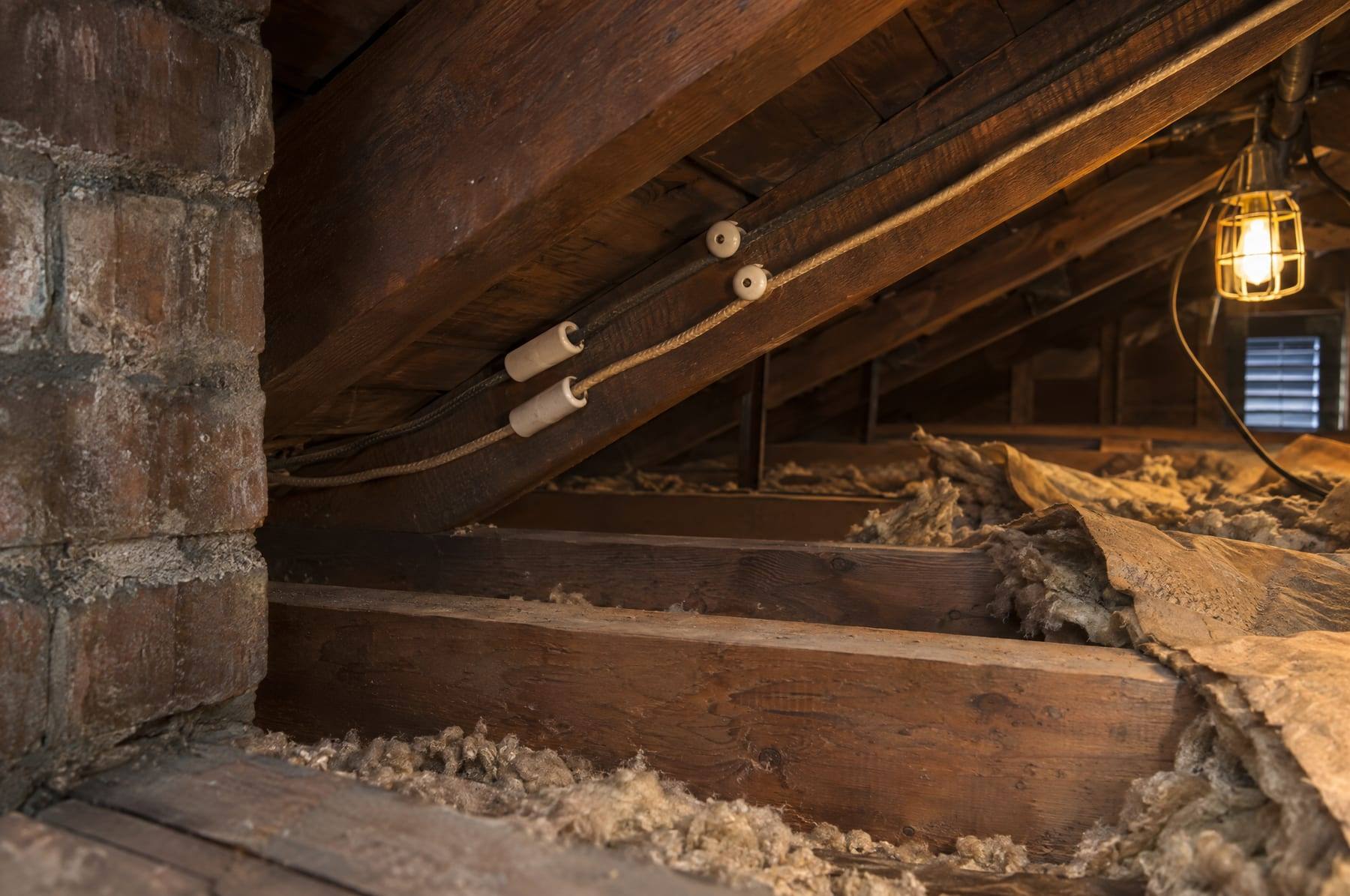
Electric heating and cooling, cooking, water heating and car charging. The DOE fact sheet lists the common triggers as a heat pump in place of a furnace or air conditioner, a heat pump water heater, an all-electric kitchen with an induction cooktop, an electric dryer and an electric vehicle charger. HUD's guide adds that houses built before 1980 may have too few circuits by current standards, so a kitchen or bathroom remodel adds circuits even when no large appliance changes.
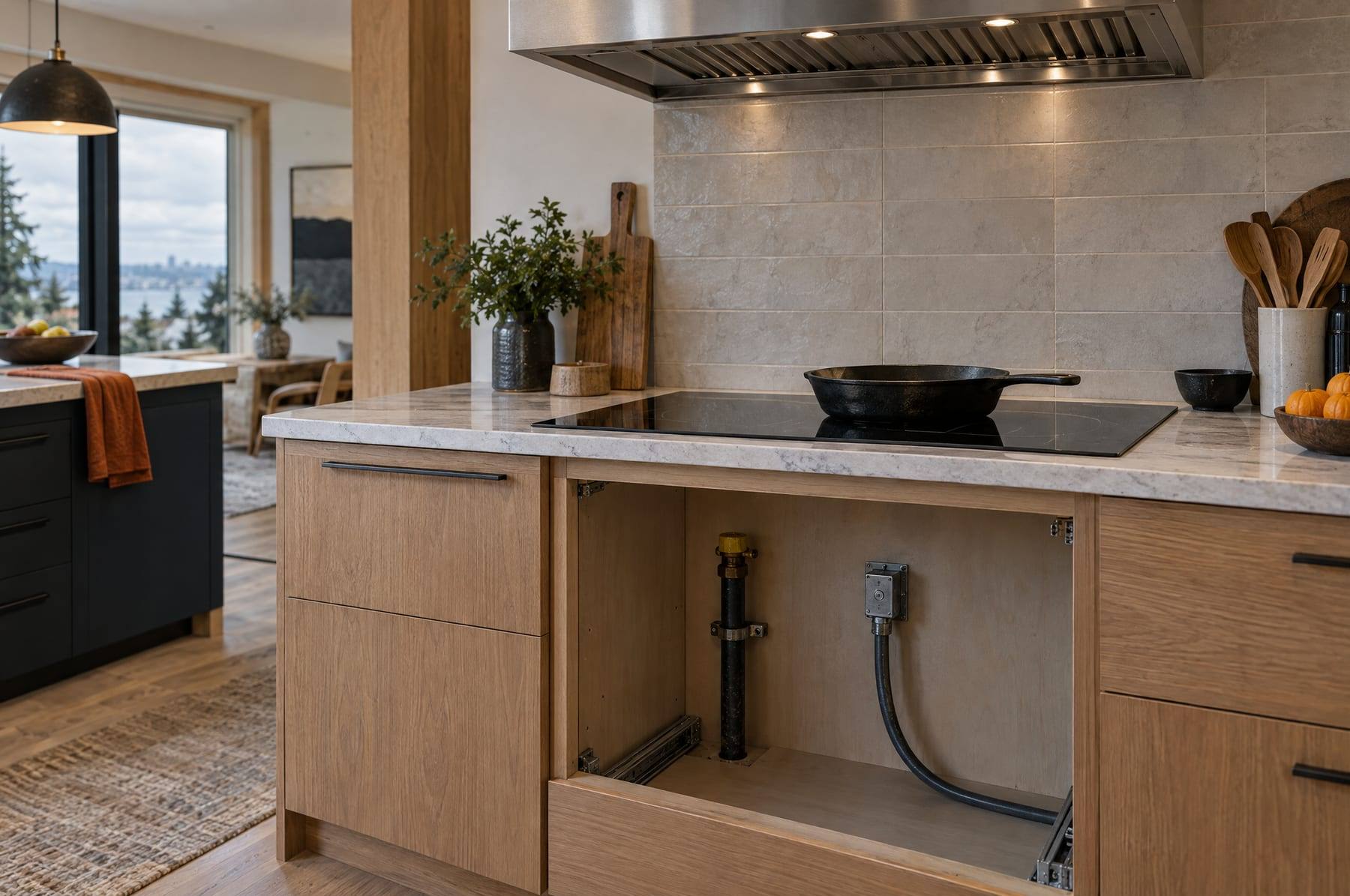
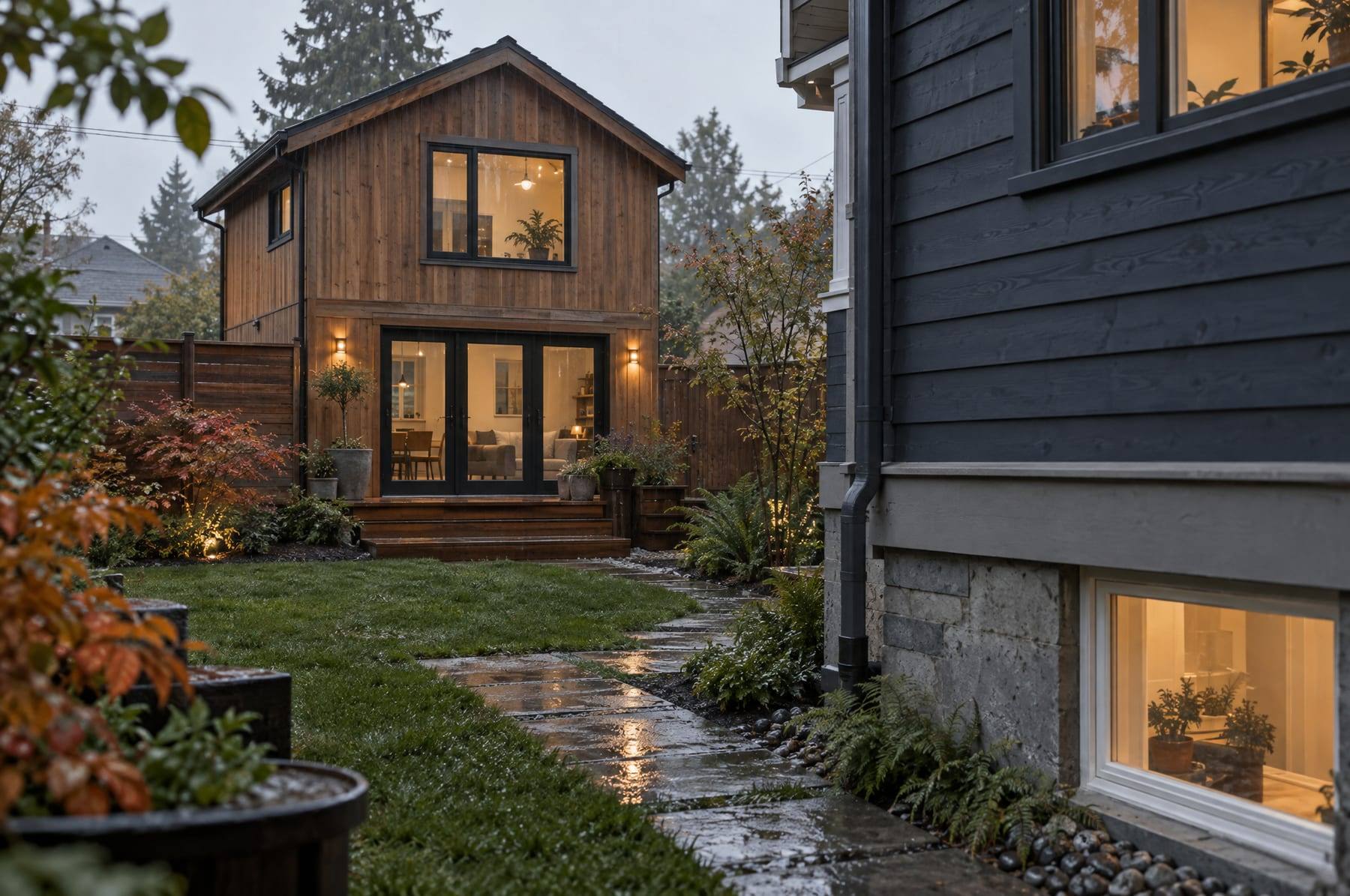
An ADU or backyard cottage changes the question too. City Light publishes example plan sets for a single-family house with a DADU, and with both an ADU and a DADU, and its handbook lists services feeding more than one building or lot among the projects that often need its engineering services. The kitchen side is covered in switching a kitchen from gas to induction, and backyard cottages in ADU and DADU building.
Can I avoid upgrading the service?
Sometimes. City Light encourages efficiency and energy management to cut existing loads and peak demand, which reduces the need for larger services. The 2023 code added section 220.70: when an energy management system limits the current to a service, its maximum setpoint may be used in the load calculation. Seattle's version allows this for an existing service but not to reduce the calculation for a new service installation.
The DOE fact sheet lists the tools: smart panels or smart circuit breakers that control individual circuits to hold down a home's peak demand, circuit-sharing devices, and power-efficient appliances. City Light's 2026 handbook notes that energy management systems (smart panels) are among the projects that often need its engineering review.
What are the steps for a service upgrade in Seattle?
- 01
Load study
An electrician or electrical consultant calculates the new load and the service size it needs.
- 02
City Light application
City Light requires an electric service application for any alteration of an existing service. It asks for the property owner's details, the electrician's, the service type and date needed, and usually a site plan, an electrical site plan and load calculations.
- 03
SDCI electrical permit
Filed by a licensed electrical contractor, or by an owner doing the work in a house they own and occupy.
- 04
Pre-construction meeting
City Light says to ask your representative whether one is needed, and highly encourages meeting on site before construction.
- 05
Install and pass SDCI's inspection
The city's service inspection comes first; City Light cannot do any work until it has passed.
- 06
City Light inspection and payment
City Light inspects, and requires payment for its services before it completes the connection.
- 07
Connection
City Light releases the work order to its crews and connects the new service.
| Service type | Application processing | Service design | Connection |
|---|---|---|---|
| Service upgrade, simple (single-phase, overhead, 200 amps or less) | 2 weeks | 16 weeks | 10 weeks |
| Service upgrade, complex (three-phase or underground) | 2 weeks | 20 weeks | 10 weeks |
| Service removal, simple (single-phase, 400 amps or less) | 2 weeks | Not applicable | 6 weeks |
Requirements for Electric Service Connection, 2026 edition. Estimates per phase; they leave out the time taken by contractors, the electrical reviewer and the city's inspection, and any corrections.
What does the Seattle electrical permit cost?
SDCI prices an electrical permit without plan review from Table D-15 of its 2026 Fee Subtitle: an administrative fee, the service, each circuit, then a 5% technology fee on the total.
| Item | Fee |
|---|---|
| Administrative fee, per permit | $55.48 |
| New or altered service up to 125 amps | $146.00 |
| New or altered service of 150 to 200 amps | $292.00 |
| New or altered service of 225 to 350 amps | $365.00 |
| Service of 400 amps or more | Plan review only |
| Feeder or circuit of 60 to 200 amps, such as a subpanel feeder | $146.00 |
| Branch circuit up to 25 amps | $26.28 |
| Circuit of 30 to 50 amps | $43.80 |
Example: a 200-amp service change with two new 20-amp circuits and one 50-amp range circuit is ($55.48 + $292 + 2 x $26.28 + $43.80) x 1.05 = $466.03.
City Light's charges are separate. City Light says the customer is responsible for electrical service installations and upgrades, including permits and inspections, that City Light handles only grid-side upgrades, and that its cost may or may not be included in your contractor's price.
How does a service upgrade work outside Seattle?
The steps are the same, with different offices. Where Puget Sound Energy supplies the power, its single-family residential electric service application covers modifying an existing service, must come with a site plan, and lists 200-amp, 320-amp (400-amp self-contained) and 400-amp (CT) services. The electrical permit comes from L&I or from the city: L&I lists Bellevue, Kirkland, Redmond, Renton, Sammamish and Mercer Island among the cities that issue their own. In L&I's jurisdiction, the 2023 National Electrical Code applies until the 2026 edition takes effect on December 31, 2026 (WAC 296-46B-010).
Are there rebates or tax credits for a panel upgrade in 2026?
Not federal ones. The IRS says the energy efficient home improvement credit, which covered panels of 200 amps or more needed for qualifying equipment, applies to improvements made through December 31, 2025. The state's Home Electrification and Appliance Rebates (HEAR) program, run by the Department of Commerce through 40 local administrators, covers electric panel and wiring upgrades required for new electric equipment, for households at or below 150% of area median income; not every administrator offers every rebate.
Seattle's Clean Heat program gives a $2,000 instant rebate for switching from oil heat to a qualifying heat pump, a project that often brings the panel question with it. The energy rebate calculator lists the current programs. Giant Builders looks at the panel and the service at the free in-home estimate, and the written, itemized estimate shows any service work as its own line.
Questions people also ask
01Is a 100-amp service enough for a remodeled house?
02What is the difference between the panel and the service?
03Can I replace my own panel in Seattle?
04What is a smart panel?
05Who pays for City Light's part of the upgrade?
Sources
- 01U.S. Department of Energy, Building Science Education: Home electrification and electric panel upgrades fact sheet (New Buildings Institute, 2024) (read Nov 26, 2026)
- 02Lawrence Berkeley National Laboratory: Residential codes and the National Electrical Code (April 2024) (read Nov 26, 2026)
- 03HUD: Residential Rehabilitation Inspection Guide (National Institute of Building Sciences, February 2000) (read Nov 26, 2026)
- 042023 Seattle Electrical Code Supplement Quick Reference (effective November 15, 2024), section 220.70 (read Nov 26, 2026)
- 05Seattle SDCI: Electrical permit (read Nov 26, 2026)
- 06Seattle SDCI: 2026 Fee Subtitle (Table D-15, electrical permit fees) (read Nov 26, 2026)
- 07Seattle City Light: Capacity, load and electrical service questions (read Nov 26, 2026)
- 08Seattle City Light: Apply for new or upgraded electric service (read Nov 26, 2026)
- 09Seattle City Light: Requirements for Electric Service Connection, 2026 edition (read Nov 26, 2026)
- 10Puget Sound Energy: Single family residential electric service application (100E) (read Nov 26, 2026)
- 11Washington L&I: City electrical permits and inspections (read Nov 26, 2026)
- 12WAC 296-46B-010: General electrical rules, adoption of the National Electrical Code (read Nov 26, 2026)
- 13Washington L&I: Electrical work on residential property (F500-078-000) (read Nov 26, 2026)
- 14IRS: Energy efficient home improvement credit (read Nov 26, 2026)
- 15Washington Department of Commerce: Home Electrification and Appliance Rebates (HEAR) (read Nov 26, 2026)
- 16Seattle Office of Sustainability and Environment: Seattle's Clean Heat program (read Nov 26, 2026)
Rules, rates and programs change. This article was checked against the sources above on the dates shown. It is general information for homeowners, not legal, tax or engineering advice for a specific property.