The short answer
In King, Pierce, Snohomish and Kitsap counties, the Puget Sound Clean Air Agency requires an asbestos survey of the materials a renovation will disturb before the work starts, whatever the age of the house. An AHERA-certified building inspector must do it, except that an owner who lives in a single-family house may survey it personally for a remodel. Demolishing a house always takes an inspector's survey, a notice to the agency and a 10 day wait. An owner may remove asbestos from the house they live in; elsewhere a certified contractor must.
Key points
- 01The Puget Sound Clean Air Agency requires an asbestos survey before any renovation or demolition in King, Pierce, Snohomish and Kitsap counties.
- 02Only an owner who lives in a single-family house may survey it personally, and only for a remodel, not a demolition.
- 03When a contractor does the work, state law expects a good faith inspection by an accredited inspector, given to the contractor before work starts.
- 04Demolishing a structure with more than 120 square feet of roof area needs a notice and a 10 day wait, even if no asbestos is found.
- 05No construction date proves a house is free of asbestos; the agency and L&I both say a survey is needed regardless of age.
In this article (7 sections)
- 01Do I need an asbestos survey before a remodel?
- 02Who is allowed to do the asbestos survey?
- 03Where is asbestos found in houses?
- 04What does a proper survey include?
- 05When do you have to notify the Puget Sound Clean Air Agency?
- 06Who may remove asbestos from a house?
- 07Where does the survey fit in a remodel schedule?
Do I need an asbestos survey before a remodel?
Yes, if you live in King, Pierce, Snohomish or Kitsap county. The Puget Sound Clean Air Agency, the regional air quality agency for those four counties, makes it unlawful under Regulation III, Section 4.02 to cause or allow a renovation until the owner or the owner's agent has checked the work area for suspect asbestos-containing materials and had them surveyed. An asbestos survey is a written report of an inspection, done to federal EPA procedures, that says whether the materials to be worked on contain asbestos.
- King, Pierce, Snohomish and Kitsap, under the Puget Sound Clean Air Agency
- 4 counties
- King, Pierce, Snohomish and Kitsap, under the Puget Sound Clean Air Agency
- Notice fee for asbestos removal in an owner-occupied single-family house
- $25
- Notice fee for asbestos removal in an owner-occupied single-family house
- Wait after filing a notice before a house may be demolished
- 10 days
- Wait after filing a notice before a house may be demolished
- L&I's fine for work done without an asbestos inspection
- $600 a day
- L&I's fine for work done without an asbestos inspection
The age of the house does not settle it. The agency says there is no set construction date that can be relied on to show a building has no asbestos, because only a few asbestos products were ever banned and some newly made imported materials have been found to contain it. The Department of Labor and Industries (L&I) says the same: asbestos has not been banned and can still be found in new building products, so a survey is needed regardless of the building's age.
Who is allowed to do the asbestos survey?
An AHERA-certified building inspector: a person who has completed the inspector training in the EPA's model accreditation plan and holds a current certificate. AHERA is the federal Asbestos Hazard Emergency Response Act, whose training standard Washington uses.
There is one exception. Under Section 4.02(a), an inspector is not required for the renovation of an owner-occupied single-family residence, and the agency's homeowner page says that if you live in and own the house being remodeled, not demolished, you may survey it yourself. The rule defines a single-family residence as a building used by one family who owns it as their home, including a house with a mother-in-law apartment or a detached garage. It excludes rental property, multi-unit buildings, condominiums and mixed-use buildings. In all of those, and for any demolition, the survey must be done by an AHERA inspector.
The state law has its own narrow alternative: no inspection is required if the owner is reasonably certain asbestos will not be disturbed, or assumes it will be and takes the maximum precautions the federal and state rules require. On a real remodel, assuming everything is asbestos usually costs more than testing it.
Where is asbestos found in houses?
In many common building materials. The agency says asbestos was used in more than 3,000 building products. Its rule lists surfacing material, thermal system insulation, roofing other than asphalt shingles, fire barriers, gaskets, flooring and cement siding as suspect materials, and its survey guidance names dozens more.
- Spray-on popcorn ceiling texture, textured paint, plaster and drywall joint compound
- Sheet vinyl flooring and its backing, vinyl floor tiles and the mastic under them
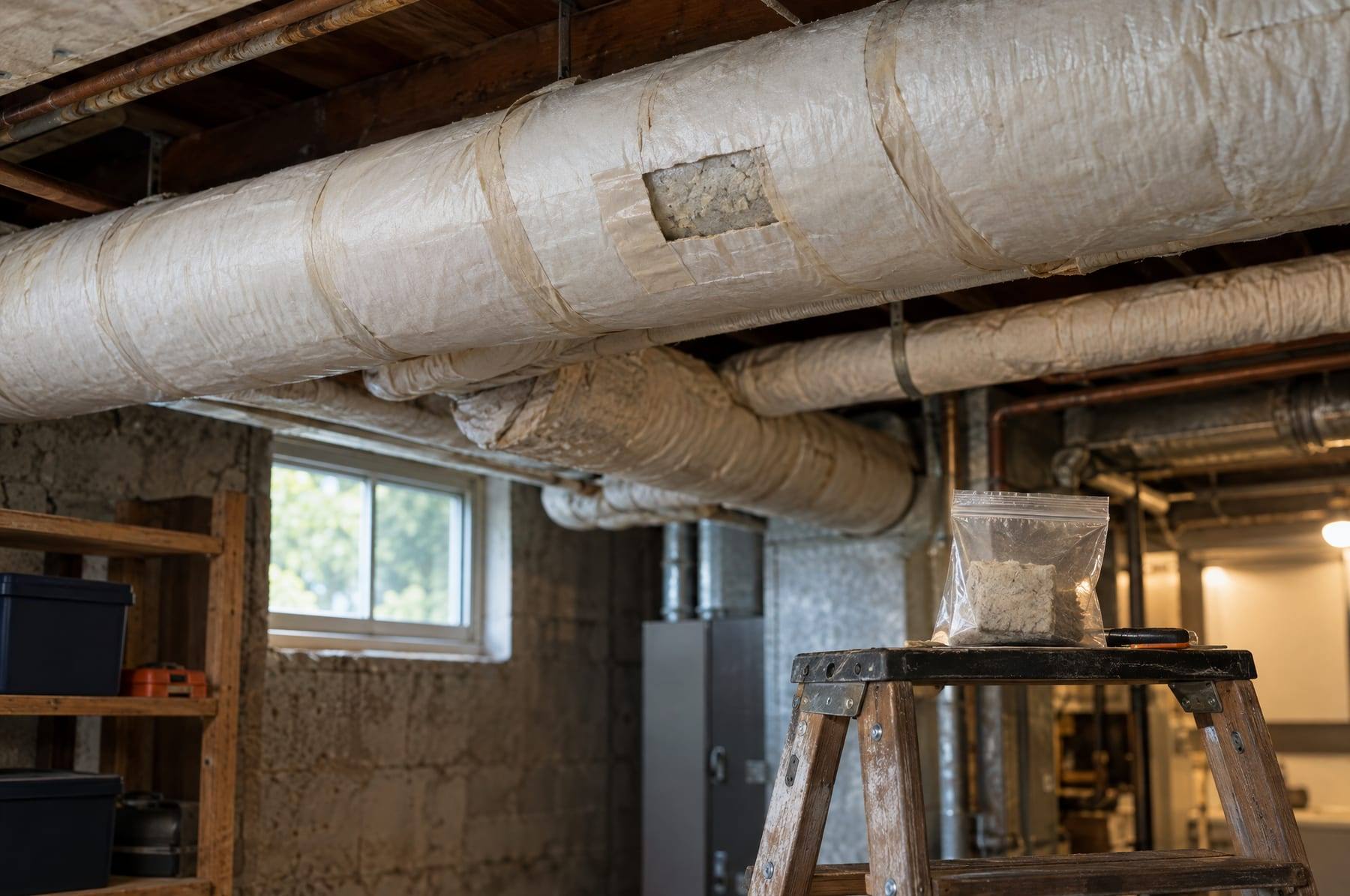
- Insulation on pipes, boilers and furnaces, and the tape or paper wrapped on heating ducts
- Cement board siding and other cement asbestos board
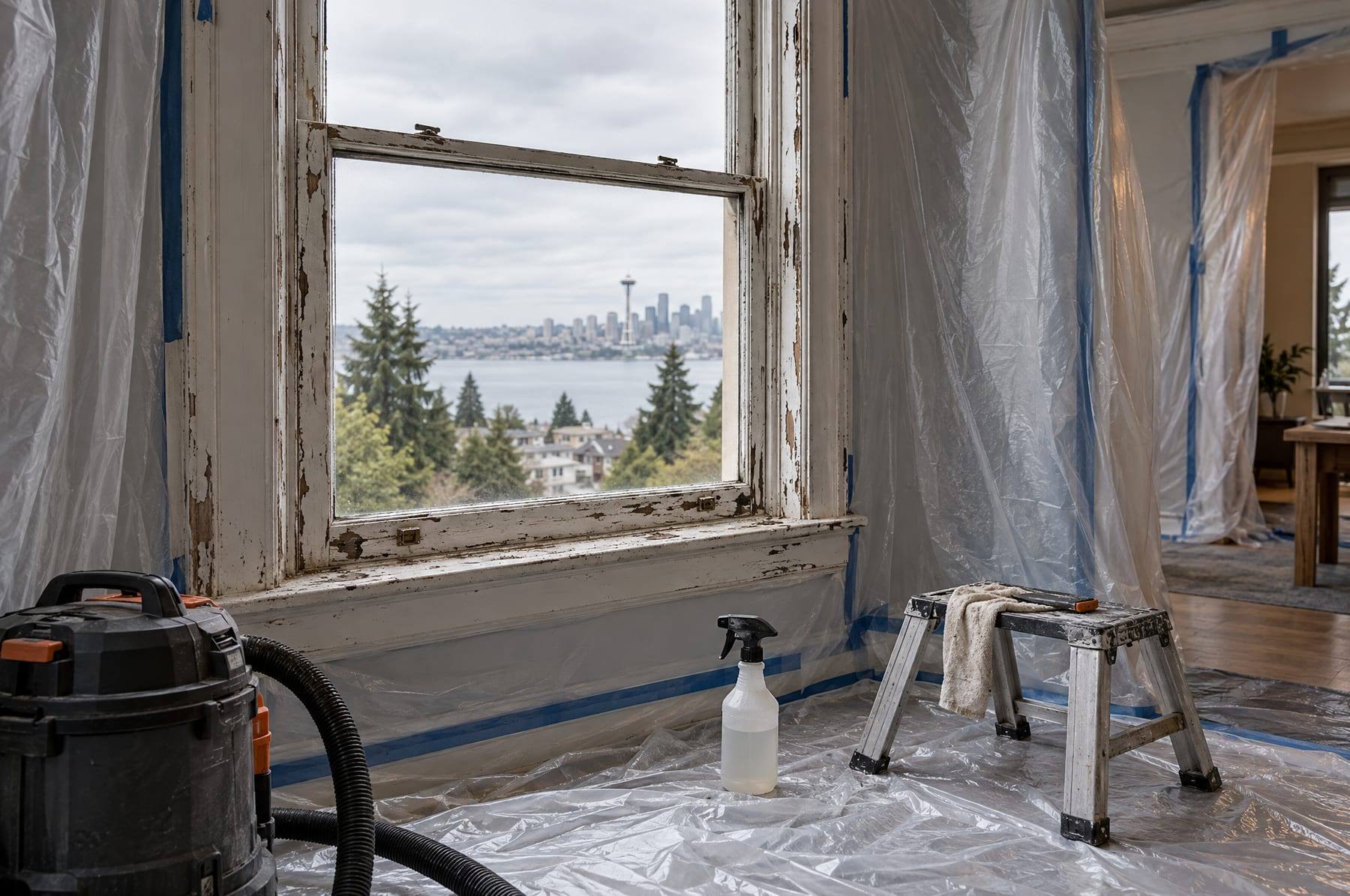
- Window glazing putty, caulking and other putties
- Rolled roofing, vapor barrier paper, blown-in insulation and the paper backing on fiberglass batts
The rules treat friable material most strictly. The agency defines it as material that can be crumbled, pulverized or reduced to powder by hand pressure, or by the forces of demolition or disposal: pipe insulation, surfacing material, sheet vinyl with a paper-like backing and cement asbestos products are its examples. Nonfriable material, such as vinyl asbestos tile, mastic, caulking and asphalt roofing in good condition, has lighter handling rules but still cannot be sanded, ground or sawn unless it is handled as friable.
What does a proper survey include?
A survey covers every material the project will disturb, including hidden ones. The agency's Asbestos Survey Guidance expects destructive investigation where needed to reach hidden spaces, and recommends opening each building system in at least three locations. It also warns that a limited survey done as part of a pre-purchase home inspection is not likely to meet the requirements and would not suffice.
- Samples of each suspect material in the work area, sent to a lab, or materials the owner chooses to presume contain asbestos.
- A written report the owner keeps and shares. Section 4.02(a)(4) requires a summary to be posted at the site or given in writing to everyone who may contact the material.
- A copy kept at the site. Section 4.03(a)(6) requires the survey, and any notice, to be available for inspection at the project at all times.
Only an AHERA inspector may declare a suspect material free of asbestos, except in an owner-occupied single-family house being renovated. Survey the whole scope at once: a kitchen survey that skips the subfloor or the wall shared with the bathroom will be redone when those are opened.
When do you have to notify the Puget Sound Clean Air Agency?
Before removing friable asbestos above a small threshold, and before any demolition. Notices are filed online with a nonrefundable fee under Section 4.03.
| Situation | Notice required | Fee and wait |
|---|---|---|
| Removing friable asbestos in your own owner-occupied single-family house | Yes, a Single-Family Residence Notification before removal | $25; no waiting period beyond filing first |
| Removing less than 10 linear feet of pipe insulation or 48 square feet of other friable material in a calendar year | No | None, but the work and disposal rules still apply |
| Removing nonfriable material such as vinyl asbestos tile, mastic, caulking or asbestos roofing | No | None, but the removal method in Section 4.05(c) applies |
| Demolishing a structure with more than 120 square feet of roof area | Yes, even if no asbestos is present | 10 day wait; the agency will not accept a notice after demolition |
Puget Sound Clean Air Agency, Regulation III Article 4 and its homeowner pages. Rental, condominium and other buildings have a separate fee table by quantity.
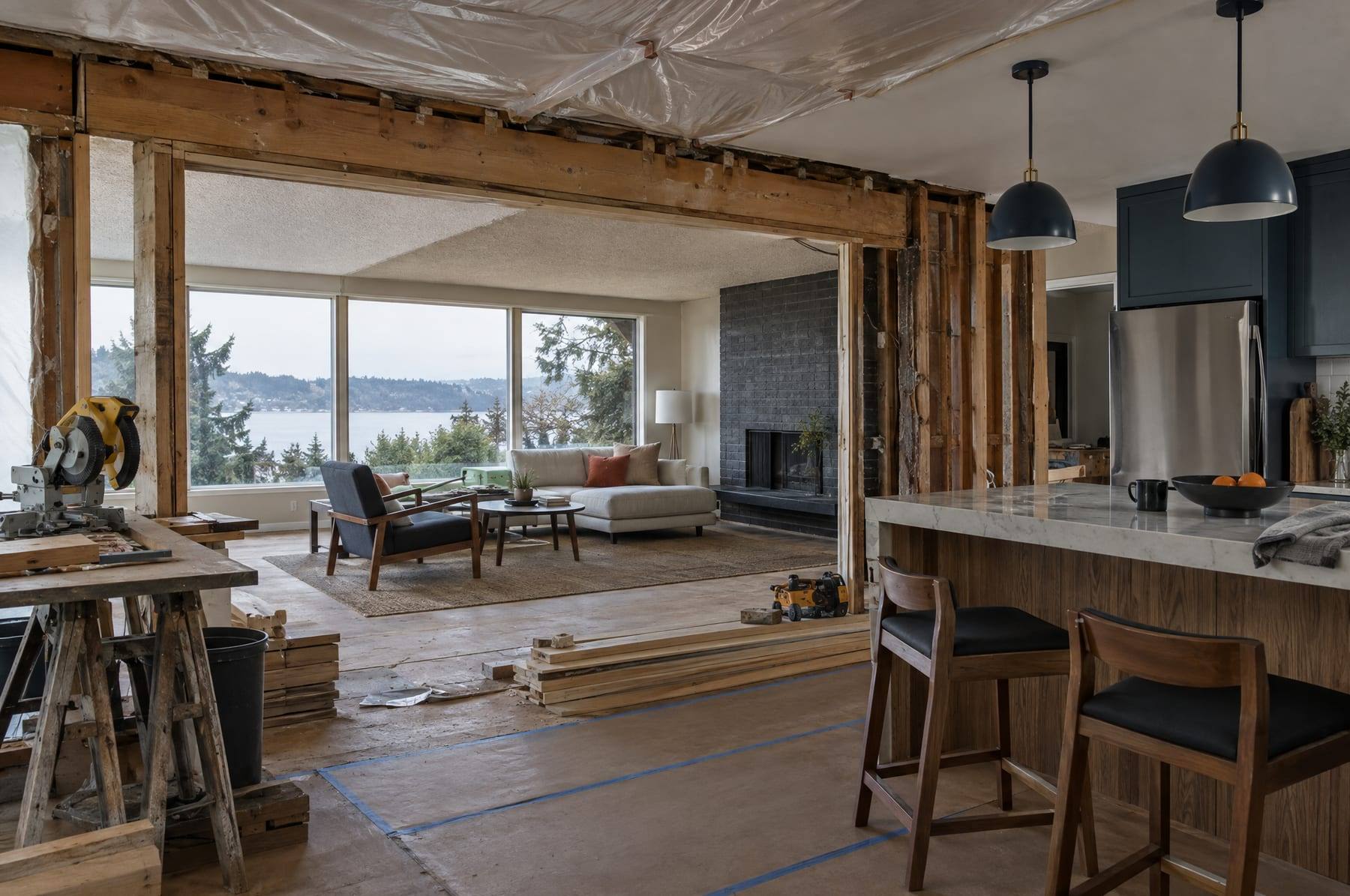
A remodel that tears out walls is not a demolition in the agency's terms. The rule defines demolition as wrecking or dismantling a structure so that it is permanently uninhabitable or unusable, and renovation as altering a building in any way except demolition. Taking down a detached garage or shed with more than 120 square feet of roof area, though, is a demolition and needs the notice and the wait.
Who may remove asbestos from a house?
A certified asbestos abatement contractor, with one exception. The agency says friable asbestos must be removed by an L&I-certified abatement contractor unless the work is in a single-family house the owner occupies, and that this is the only case where the owner may legally remove it. The exemption covers work performed by the owner. Under L&I's rule, only certified asbestos abatement contractors may bid on or work on an abatement project, which state law defines as one involving 3 square feet or 3 linear feet of asbestos material, or more.
Removal is not the only choice. The agency notes that it may be possible to work around asbestos without disturbing it, to repair it by re-sealing it in place, or to encapsulate it with a penetrating or bridging product, and that encapsulating or re-sealing undisturbed material needs no notice. It also cautions that painting over material can make later removal harder and costlier. Whoever removes it, friable waste must go to an authorized disposal site within 10 days with a waste shipment record, and nonfriable waste into a container labeled nonfriable asbestos waste.
Where does the survey fit in a remodel schedule?
- 01
Survey before bids
State law asks the owner to give the inspection report to contractors before they bid, so the asbestos work is priced in the estimate instead of found during demolition.
- 02
Read the results
The report lists each material and whether it contains asbestos. Materials that tested negative, or that the work will not touch, need nothing more.
- 03
Choose a path
Leave in place, repair, encapsulate or remove. Adjust the design if a small change avoids disturbing a large area.
- 04
Notify and abate
The abatement contractor files the notices and removes the material under the agency's work practices, before the general demolition starts.
- 05
Demolish and build
With the survey and any notice kept on site, the remodel proceeds. The permit timelines article covers what the city's side takes.
Houses built before 1978 also face the lead paint rules for paid work, covered in the lead-safe renovation article. Seattle's kitchen and bathroom permit guides show where both fit with the city's permits.
Questions people also ask
01Can a pre-purchase home inspection count as the asbestos survey?
02Can I scrape off a popcorn ceiling myself?
03Does a condominium owner get the homeowner exception?
04What happens if work starts without an asbestos survey?
Sources
- 01Puget Sound Clean Air Agency: Homeowner renovation (read Nov 26, 2026)
- 02Puget Sound Clean Air Agency: Contractor renovation (read Nov 26, 2026)
- 03Puget Sound Clean Air Agency: Homeowner demolition (read Nov 26, 2026)
- 04Puget Sound Clean Air Agency: Asbestos FAQs (read Nov 26, 2026)
- 05Puget Sound Clean Air Agency: Regulation III, Article 4, asbestos control standards (read Nov 26, 2026)
- 06Puget Sound Clean Air Agency: Asbestos Survey Guidance (Form 66-149) (read Nov 26, 2026)
- 07Washington L&I: Asbestos (read Nov 26, 2026)
- 08Washington L&I: Asbestos certification and certified contractors (read Nov 26, 2026)
- 09RCW 49.26.013: inspection of construction projects required (read Nov 26, 2026)
- 10RCW 49.26.100: definitions (abatement project, owner) (read Nov 26, 2026)
- 11WAC 296-65-030: only certified contractors may work on abatement projects (read Nov 26, 2026)
Rules, rates and programs change. This article was checked against the sources above on the dates shown. It is general information for homeowners, not legal, tax or engineering advice for a specific property.