The short answer
In Washington, anyone paid to renovate, repair or paint in a home built before 1978 must follow the state's lead Renovation, Repair and Painting program, run by the Department of Commerce under chapter 365-230 WAC in place of EPA's federal program. The firm must be certified, a certified renovator must direct the work, and the owner must get the Renovate Right pamphlet no more than 60 days before work starts. Jobs that disturb no more than 6 square feet of paint per room inside, or 20 square feet outside, are exempt unless windows are replaced.
Key points
- 01Washington's Department of Commerce, not EPA, runs the lead renovation program here, under chapter 365-230 WAC.
- 02It applies to paid work that disturbs paint in housing built before 1978, unless testing shows the paint is not lead-based.
- 03Small jobs are exempt: 6 square feet of painted surface per room inside or 20 square feet outside, but never window replacement or demolition of painted surfaces.
- 04Homeowners working on their own homes are not covered, though the same practices protect their families.
- 05Commerce publishes lists of certified firms, and of suspended and revoked ones, that anyone can download.
In this article (6 sections)
Who runs the lead renovation rule in Washington?
The Washington State Department of Commerce. EPA's Renovation, Repair and Painting rule, usually called the RRP rule, sets lead-safe practices for paid work in older homes. Federal law lets a state run its own program in place of EPA's, and EPA announced in the Federal Register on May 10, 2011 that Washington was authorized to do so as of March 16, 2011. Commerce's Lead-Based Paint Program administers it under chapter 365-230 of the Washington Administrative Code, and a 2025 state law, RCW 70A.420.100, now sets the program out in statute.
In practice the rules match EPA's: the same 1978 cutoff, the same small-job thresholds, the same work practices. What differs is the paperwork. Firms working in Washington are certified by Commerce, and Commerce keeps the public lists of certified firms.
Which remodeling jobs does the rule cover?
Under WAC 365-230-300, the rule applies to all renovations performed for compensation in target housing and child-occupied facilities. Target housing is any housing built before 1978, except housing for the elderly or people with disabilities and zero-bedroom units, unless a child under six lives there. A child-occupied facility is a pre-1978 building, such as a daycare, regularly visited by a child under six.
- The year the federal government banned lead-based paint for use in homes
- 1978
- The year the federal government banned lead-based paint for use in homes
- Share of homes built before 1940 likely to have lead-based paint, per EPA
- 87%
- Share of homes built before 1940 likely to have lead-based paint, per EPA
- Share of homes built 1940 to 1959, per EPA
- 69%
- Share of homes built 1940 to 1959, per EPA
- Share of homes built 1960 to 1977, per EPA
- 24%
- Share of homes built 1960 to 1977, per EPA
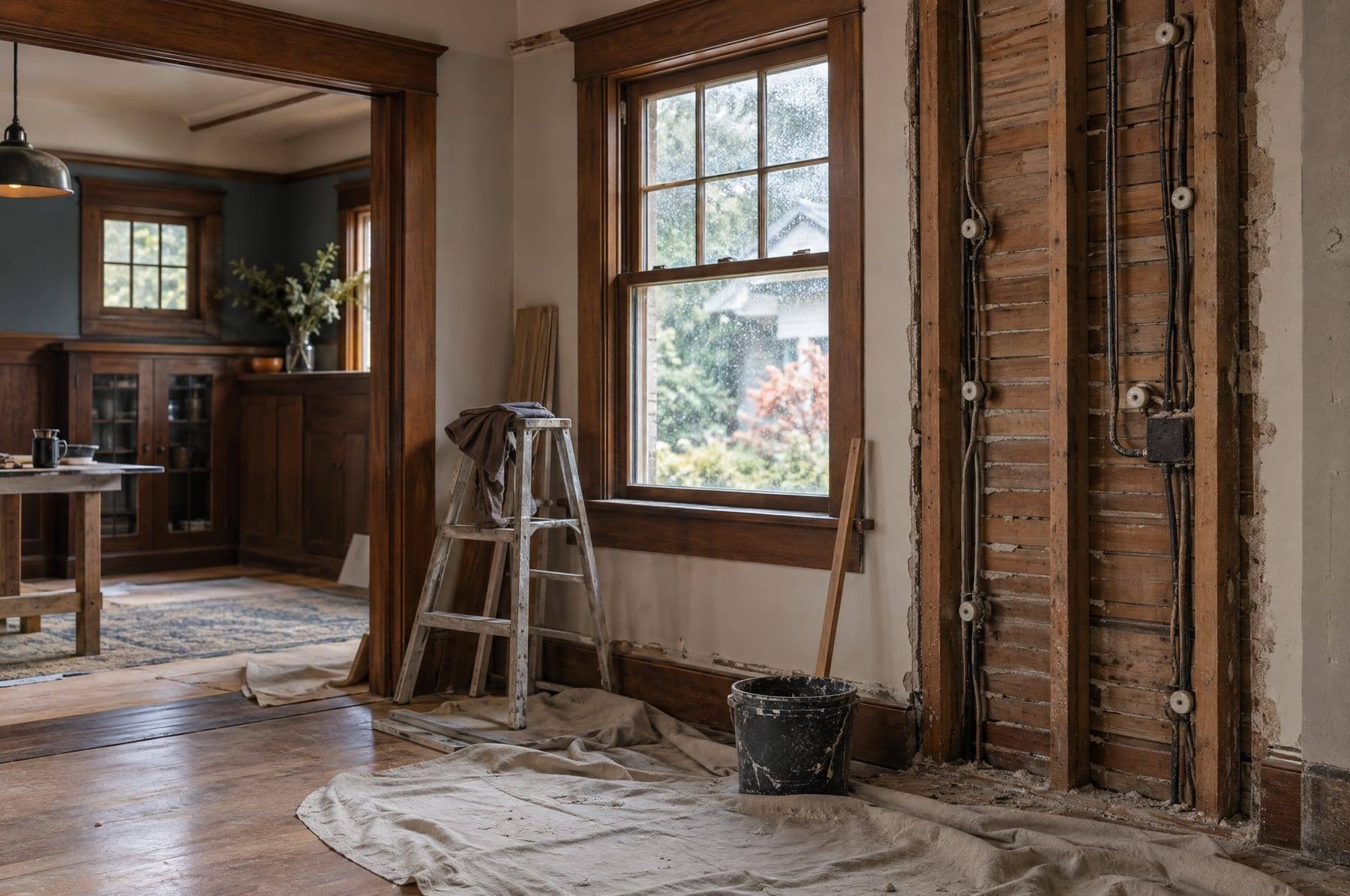
EPA's figures by decade show why the rule matters in the Seattle area, where many houses predate 1940. A kitchen, bathroom or basement remodel in a pre-1978 house almost always disturbs more paint than the small-job limit allows, so the rule usually applies unless testing shows the paint is not lead-based.
| Job | Covered? |
|---|---|
| Disturbs 6 square feet or less of painted surface in each room inside, with no prohibited practices | No, it is minor repair and maintenance |
| Disturbs 20 square feet or less of painted surface outside, with no prohibited practices | No, it is minor repair and maintenance |
| Any window replacement | Yes, whatever the area |
| Demolishing painted surfaces, such as removing a plastered wall | Yes, whatever the area |
| Several small jobs in the same room within 30 days | Counted as one job |
| Components tested and found free of lead-based paint | No, with a copy of the written determination |
| The homeowner doing the work in their own home | No, the rule covers paid work |
When a painted component is removed, the whole surface area removed counts as paint disturbed.
What certification does a contractor need?
Two kinds: the firm and at least one person. Under WAC 365-230-360, no firm may perform, offer or claim to perform renovations for compensation without first being certified by Commerce, and a certified firm may use only appropriately certified individuals. EPA's notice authorizing Washington's program describes the firm's duty to assign a certified renovator to oversee each job. The renovator is the person trained to set up containment, direct the crew and check the cleanup.
- Firm certification lasts five years from the date it is issued, and the firm must be recertified every five years. Commerce's fee in its current rule is $25.
- Renovator certification comes from a course with a Washington-accredited training provider, and a refresher course is due within five years of the last one. A renovator certified by EPA or another authorized state registers that certificate with Commerce.
- Landlords and property managers who do their own paint-disturbing work in pre-1978 rentals need firm certification too, according to Commerce.
What must happen before the work starts?
The owner gets the pamphlet. Under WAC 365-230-320, no more than 60 days before beginning work in a pre-1978 home, the firm must give the owner EPA's pamphlet, The Lead-Safe Certified Guide to Renovate Right, and either get a written acknowledgment that the owner received it or a certificate of mailing at least seven days before the work. If the owner does not live in the unit, the adult occupant gets it too.
Testing is a choice. The rule does not apply to components that a certified inspector or risk assessor has determined in writing are free of lead-based paint, or that a certified renovator has tested with an EPA-recognized test kit or by sending paint chips to an EPA-recognized lab. The threshold is 1.0 milligram per square centimeter or 0.5 percent by weight. EPA's guidance says a firm may instead assume lead-based paint is present and follow the rule, with no testing.
What does lead-safe work look like on site?
WAC 365-230-330 sets the steps for containing the work, the methods that are banned and the cleanup, and the certified renovator is responsible for each of them.
- 01
Contain the work area
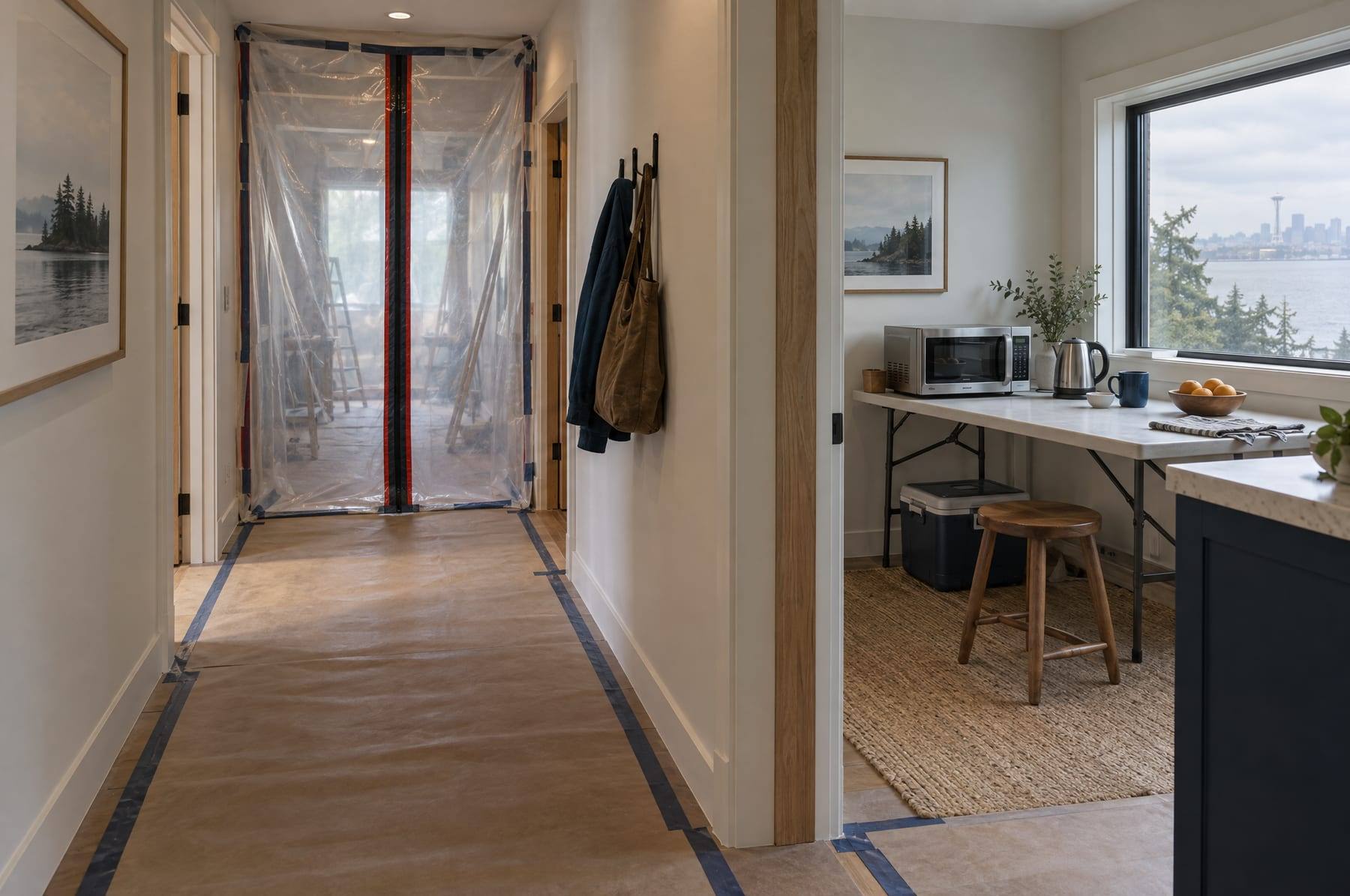
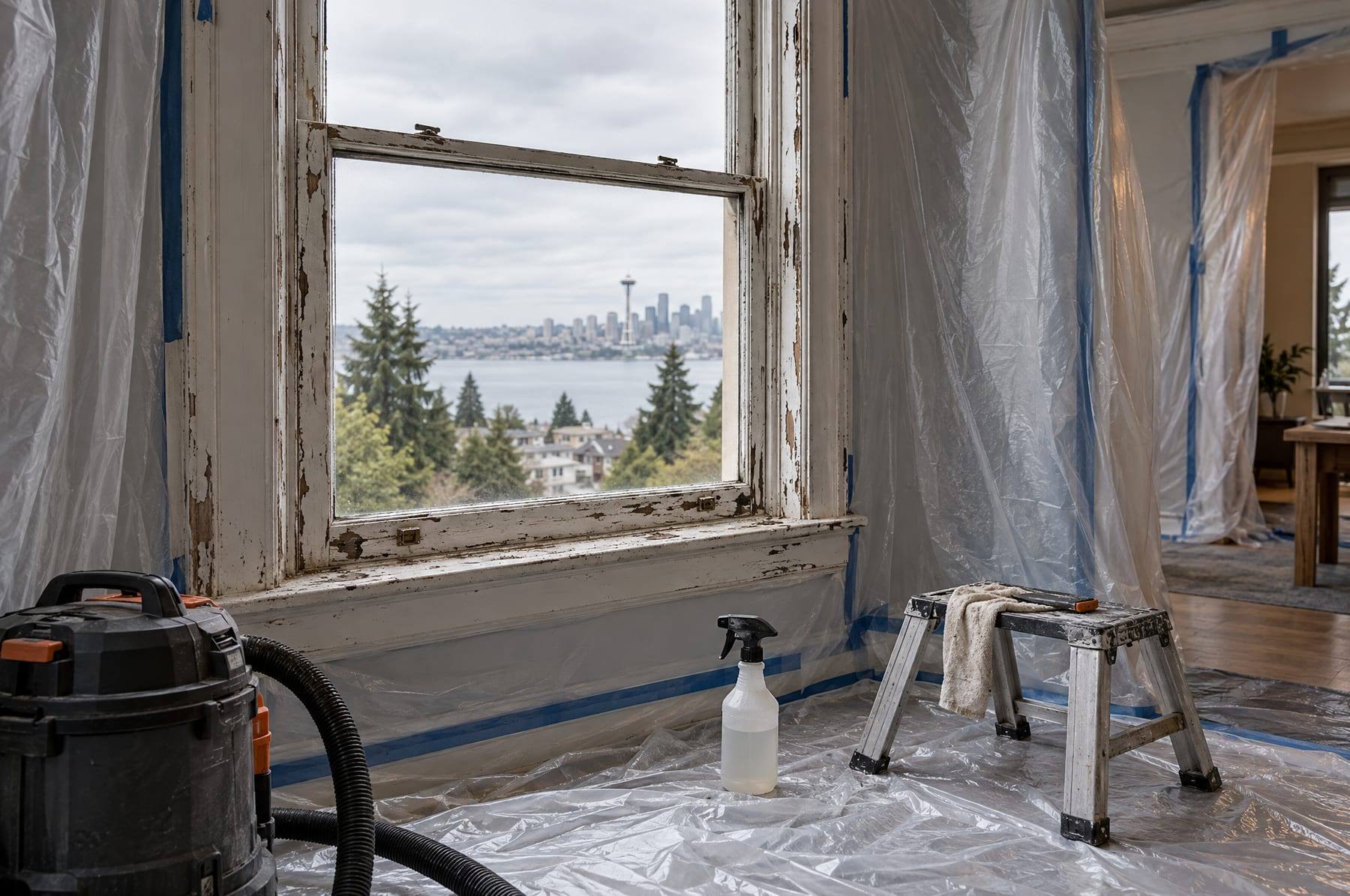
Inside, floors are covered with taped-down plastic at least 6 feet beyond the surfaces being worked on, and the work area is closed off. Outside, doors and windows within 20 feet are closed and the ground is covered at least 10 feet beyond the work.
- 02
Use allowed methods only
Open-flame burning or torching of paint is prohibited. Sanding, grinding, planing, needle guns and blasting are prohibited unless the machine has a shroud or containment and a HEPA vacuum attachment. Heat guns may be used only below 1,100 degrees Fahrenheit.
- 03
Clean up
Dust and debris are collected, and surfaces are cleaned as the rule describes.
- 04
Verify the cleaning
The renovator wipes windowsills, floors and countertops with a wet disposable cloth and compares each cloth with EPA's cleaning verification card. A surface passes when the cloth matches or is lighter than the card.
- 05
Keep records
The firm keeps its records for three years and gives the owner and occupant a record of compliance with the final invoice or within 30 days of finishing, whichever comes first.
Do the rules apply if I do the work myself?
No. EPA's notice on Washington's program lists renovation by a homeowner in the owner's own occupied unit among the exemptions, and EPA's January 2026 questions and answers say the rule does not impose requirements on homeowners renovating their own homes. The rule covers people who are paid.
The hazard is the same either way. EPA says one of the most common sources of lead exposure in homes is dust and paint chips from lead-based paint, and that paint in good condition is usually not a problem until it is disturbed. If you do your own prep work in a pre-1978 house, the same containment, banned methods and cleanup protect your household, especially children under six.
Lead is one of two old-house hazards to settle before demolition. The other is asbestos, which the asbestos survey article covers, and the Craftsman remodeling article puts both in the context of the houses most likely to have them.
Questions people also ask
01How do I know if my house has lead paint?
02Does a painter need lead certification for an exterior repaint?
03Does the rule apply to a rental I own?
04Is the rule different from lead abatement?
Sources
- 01Washington Dept. of Commerce: Renovation, Repair and Painting (RRP) program (read Nov 26, 2026)
- 02Washington Dept. of Commerce: Business and homeowner resources for lead-based paint (certified firm lists) (read Nov 26, 2026)
- 03WAC 365-230-300: applicability (read Nov 26, 2026)
- 04WAC 365-230-310: definitions, minor repair and maintenance (read Nov 26, 2026)
- 05WAC 365-230-320: information distribution (Renovate Right pamphlet) (read Nov 26, 2026)
- 06WAC 365-230-330: work practice standards (read Nov 26, 2026)
- 07WAC 365-230-340: recordkeeping (read Nov 26, 2026)
- 08WAC 365-230-360: firm certification (read Nov 26, 2026)
- 09WAC 365-230-380: renovator certification and refresher training (read Nov 26, 2026)
- 10WAC 365-230-260: certification fees (read Nov 26, 2026)
- 11RCW 70A.420.100: state renovation, repair and painting program (read Nov 26, 2026)
- 12Federal Register, May 10, 2011: Washington authorized to run the RRP program (76 FR 27044) (read Nov 26, 2026)
- 13U.S. EPA: Protect your family from sources of lead (read Nov 26, 2026)
- 14U.S. EPA: Lead-based paint program frequent questions (January 2026) (read Nov 26, 2026)
Rules, rates and programs change. This article was checked against the sources above on the dates shown. It is general information for homeowners, not legal, tax or engineering advice for a specific property.