
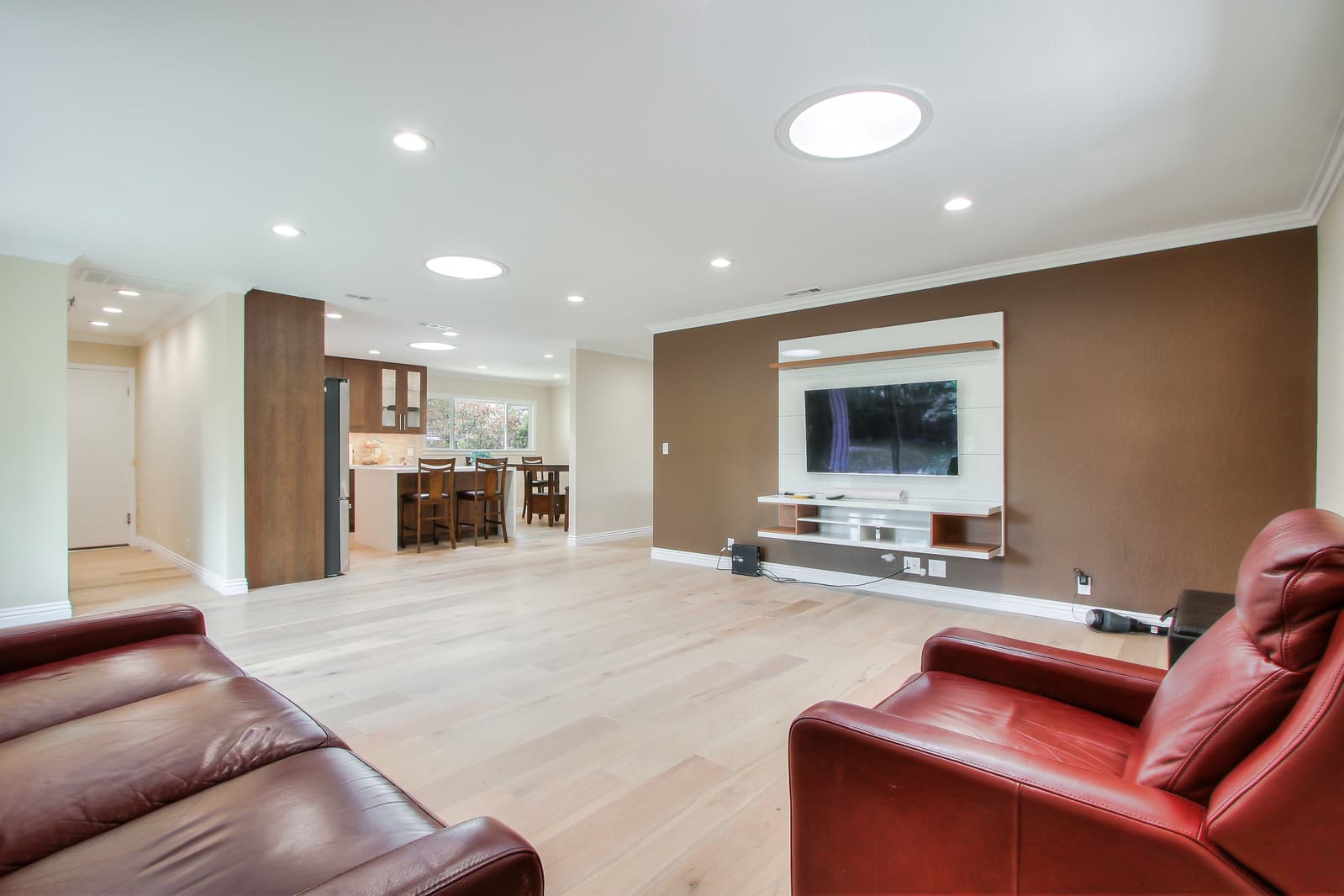
Kent Home Remodeling
Construction Guide
Current costs, permits, timelines, and local insights for kitchen, bathroom, basement, garage, and whole-home remodeling projects in Kent.
Local Market
Why Kent Homeowners Remodel Instead of Moving
Kent is the sixth-largest city in Washington State with a population of approximately 137,000 and a median home value of $537,500 (ACS 2023; market estimates reach $594,000–$612,000 in 2025–2026). With 56.9% of households owner-occupied and moderate home values compared to Seattle and the Eastside, the “improve don't move” strategy is especially compelling here — homeowners locked into low mortgage rates are investing in upgrades rather than competing in a tight market.
The housing stock reinforces this demand. Kent's median construction year is approximately 1985, and the bulk of homes were built during the 1970s–1990s suburban expansion boom. These homes are now 25–55 years old — squarely in the prime remodeling window for kitchens, bathrooms, electrical panels, plumbing, and insulation. Ramblers, split-levels, and builder-grade tract homes dominate neighborhoods like East Hill, Scenic Hill, and West Hill.
Kent's Pacific Northwest climate — 43+ inches of annual rain — creates chronic moisture management challenges. Crawl space mold, moss-damaged roofs, and siding deterioration are common in older homes. Meanwhile, Washington's HB 1337 ADU legislation and Kent's own ReCode Kent zoning reforms (effective July 2025) have opened new possibilities for garage conversions, basement ADUs, and accessory dwelling units.
What to Expect
Common Kent Home Types & Construction Realities
Understanding your home's style, age, and site conditions is the first step in planning an effective remodel.
Ramblers & Split-Levels
The most common styles in Kent, built from the 1950s through the 1980s. Single-story ramblers are ideal for aging-in-place modifications but often need opened-up floor plans, updated kitchens/baths, and modernized electrical and plumbing systems. Split-levels and tri-levels are especially prevalent in East Hill and Scenic Hill.
1980s–1990s Tract Homes
Two-story traditional and builder-grade suburban homes from Kent’s growth era. These have decent structural bones but dated cosmetics, undersized electrical panels, and builder-grade finishes throughout. Strong candidates for cost-effective kitchen, bathroom, and whole-home refreshes.
Valley vs. Hilltop Sites
Valley-floor homes (downtown Kent) sit on alluvial soil from the Green River — prone to saturation and within FEMA flood zones. Hilltop neighborhoods (East Hill, West Hill, Scenic Hill) have better drainage but steeper lots. Site conditions directly affect basement and foundation work.
Polybutylene & Outdated Plumbing
Homes built in the 1970s–1990s may have polybutylene (PB) pipes that become brittle and fail. Pre-1970s homes may have galvanized steel pipes that corrode and reduce water pressure. Both are commonly replaced during kitchen and bathroom remodels.
Moisture, Moss & Crawl Spaces
43+ inches of annual rain drives chronic crawl space humidity, roof moss growth, siding deterioration, and attic mold. Proper waterproofing, ventilation, and moisture-resistant materials are non-negotiable in Kent remodels — especially for basements and below-grade spaces.
Flood, Seismic & Energy Code
Green River Valley areas fall within FEMA flood zones. Washington has the 2nd-highest earthquake risk in the U.S., with valley-floor soil susceptible to liquefaction. The 2021 Washington State Energy Code applies to all heated-space conversions, requiring upgraded insulation, windows, and ventilation.
2025–2026 Estimates
Remodeling Cost Benchmarks in Kent
Kent remodeling costs run 5–10% below Seattle city proper and 10–15% below the Eastside, but within the same metro premium band — approximately 15% above national averages due to higher labor rates and code requirements.
| Service | Low Range | Midrange | High End |
|---|---|---|---|
| Kitchen Remodeling | $15,000–$35,000 | $45,000–$95,000 | $100,000–$200,000+ |
| Bathroom Remodeling | $8,000–$25,000 | $30,000–$55,000 | $70,000–$110,000+ |
| Basement Finishing | $25,000–$50,000 | $60,000–$125,000 | $125,000–$250,000+ |
| Garage Conversion | $10,000–$25,000 | $30,000–$60,000 | $70,000–$150,000+ |
| Complete Home Remodel | $50–$100/sq ft | $150–$275/sq ft | $275–$450+/sq ft |
Figures are 2025–2026 informed estimates based on Seattle-metro contractor data, the 2025 Cost vs. Value Report, and local Kent benchmarks. Actual costs vary by scope, home age, and site conditions.
Regulations
Permits & Planning for Kent Remodels
Most residential remodeling projects in Kent require permits if they involve constructing, enlarging, altering, or repairing a building — or any electrical, mechanical, or plumbing work. Kitchen and bathroom remodels with plumbing or electrical changes, basement finishing with egress and insulation requirements, garage conversions, and additions all typically require a residential building permit from the City of Kent Permit Center.
Minor cosmetic work (painting, non-structural flooring, cosmetic cabinet refacing) generally does not require a permit. However, basement finishing and garage conversions almost always trigger permits due to change of use, egress requirements, and energy code compliance.
The City of Kent Permit Center (Economic and Community Development Department) is located at 400 West Gowe Street. Applications are submitted through the City's online portal. Most permits require both an intake appointment and formal review before work begins. Inspections occur at key stages: framing, insulation/energy code, rough plumbing/mechanical/electrical, and final sign-off.
Kent homeowners should be aware of FEMA flood zone status — significant portions of the Green River Valley floor are in mapped floodplains, which affects basement projects. Check your address at FEMA's Flood Map Service Center. The 2021 Washington State Energy Code applies to all heated-space conversions (basements, garages, additions), requiring R-60 ceiling insulation, upgraded windows, and mechanical ventilation. Kent's ReCode Kent zoning reforms (effective July 2025) now allow duplexes, triplexes, and at least two ADUs on all residential lots.
All Washington contractors must be registered with the Department of Labor & Industries, carry a $12,000 surety bond and $200,000 liability insurance, and provide a written disclosure statement for residential jobs of $1,000 or more. Verify any contractor's license at the L&I portal before signing a contract.
We Handle Permits for You
Giant Builders manages the full Kent permit process — applications, plan reviews, and inspections — as part of every project. You don't need to navigate the Permit Center on your own.
Official Kent & Washington State Resources
- Do I Need A Permit? — City of Kent permit requirements
- Kent Permit Center — Applications, contacts & hours
- Kent Floodplain Information — Flood zone regulations & elevation requirements
- FEMA Flood Map Service Center — Look up your property's flood zone status
- ReCode Kent — ADU & middle housing zoning reforms
- Kent City Planning — Zoning districts & planning review
- WA State Energy Code — 2021 WSEC-R requirements for heated-space conversions
- Verify a Contractor (WA L&I) — Check license, bond & insurance status
- WA ADU Guidance — HB 1337 statewide ADU regulations
- HEAR Program (WA Commerce) — Up to $8,000 heat pump rebates for income-qualified households
- King County Energize Program — 80–100% coverage for heat pumps & weatherization
What We Do
Remodeling Services in Kent
From single-room updates to whole-home renovations, every project is tailored to Kent's building codes, climate conditions, and housing stock.
Kitchen Remodeling in Kent
Kent’s 1970s–1990s kitchens were designed for a different era. Open-concept conversions, modern layouts, custom cabinetry, and energy-efficient upgrades transform how these homes function. Minor kitchen remodels in the Seattle metro recoup 113% of their cost, making this one of the strongest-ROI projects available for Kent homeowners.
Learn About Kitchen RemodelingBathroom Remodeling in Kent
Pacific Northwest moisture management, polybutylene pipe replacement, and universal-design features like walk-in showers and grab-bar-ready walls are top priorities in Kent bathrooms. With 43+ inches of annual rain, proper waterproofing, ventilation, and moisture-resistant materials are essential in every bathroom project.
Learn About Bathroom RemodelingBasement Finishing in Kent
Many Kent ramblers and split-levels have unfinished basements that can become home offices, guest suites, or ADU rental units. Waterproofing is especially important in the Green River Valley where high water tables are common. Egress windows, energy-code-compliant insulation, and proper moisture mitigation are critical steps.
Learn About Basement FinishingGarage Conversion in Kent
Washington’s HB 1337 now allows two ADUs per residential lot, and Kent permits ADUs up to 950 sq ft. Garage conversions offer flexible living space — home offices, in-law suites, or rental units — at 30–50% less cost per square foot than new construction. Energy code compliance for heated-space conversion is required.
Discuss Your Garage ProjectComplete Home Remodeling in Kent
For homes that need modernization across every system — electrical, plumbing, insulation, and finishes — a phased or full-scope renovation addresses the deferred maintenance common in Kent’s 1980s–1990s housing stock. With median home values around $600K, a mid-range whole-home remodel of $150K–$300K is the most strategically defensible investment.
Plan Your Whole-Home Remodel2025–2026 Trends
What Kent Homeowners Are Prioritizing
Remodel Over Relocation
With median home values around $600,000 and tight inventory throughout South King County, strategic upgrades deliver better value than the transaction costs of buying and selling. 45% of renovating homeowners nationally plan never to move.
ADUs & Garage Conversions
Washington’s HB 1337 and Kent’s ReCode reforms now allow two ADUs per lot (up to 950 sq ft each). Garage conversions and basement ADUs are accelerating as homeowners add rental income, multigenerational space, or home offices at 30–50% less cost than new construction.
Energy Efficiency & Rebates
Puget Sound Energy offers $1,500–$4,500 for heat pumps and up to $200/window. The Washington HEAR Program provides up to $8,000 for income-qualified households. King County’s Energize Program covers 80–100% of heat pump and weatherization costs for qualifying homeowners.
Aging in Place & Multigenerational Living
Kent’s diverse, family-oriented population drives demand for main-level suites, wider doorways, curbless showers, and separate-entrance ADUs. Ramblers — Kent’s most common home type — are ideal for single-floor accessible living.
Kitchen & Bathroom Upgrades
The top two remodeling priorities nationally and locally. Kent’s 1970s–1980s housing stock means many homes still have original or first-generation kitchens and bathrooms. Warm neutral palettes, large multifunctional islands, curbless showers, and water-saving fixtures lead current design trends.
Indoor-Outdoor Living
Despite the rain, Kent homeowners are investing in covered decks, composite decking for moisture resistance, and outdoor kitchens that extend usable living area year-round. Weather-protected designs are essential for the PNW climate.
Return on Investment
What Pays Off in Kent's Market
The 2025 Cost vs. Value Report (Seattle / Pacific region) shows that garage door replacements lead all categories at 268% ROI, steel entry door replacements deliver 216%, and minor kitchen remodels recoup approximately 113% of their cost — making these the highest-return projects available. The Pacific region reports the highest average remodeling ROI of any U.S. region.
With Kent's median home values around $600,000 — roughly 30–35% lower than Seattle proper — remodeling budgets must be calibrated carefully to avoid over-improving relative to neighborhood comps. Total remodel investment should generally stay under $150K–$200K to maintain positive or break-even ROI. The $35K–$70K minor-to-mid kitchen remodel is the sweet spot for Kent homeowners seeking both livability and resale value.
Family-oriented features — extra bedrooms, finished basements, functional kitchens — resonate strongest with Kent buyers. Energy efficiency (windows, insulation, heat pumps) and low-maintenance exteriors (fiber cement siding, quality roofing) perform especially well in the rain-heavy PNW climate. Puget Sound Energy rebates, the Washington HEAR Program, and King County's Energize Program can offset 30–100% of energy upgrade costs for qualifying households.
Kent Remodeling FAQ
Common questions from Kent homeowners planning remodeling projects.
How much does a kitchen remodel cost in Kent, WA?
Do I need a permit for a bathroom remodel in Kent?
How long does a full home remodel take in Kent?
What are common problems in older Kent homes?
Does a garage conversion add value in Kent?
What energy rebates are available for Kent homeowners?
Can I build an ADU on my property in Kent?
What is the ROI of a kitchen remodel in Kent?
What home styles are most common in Kent?
Should I remodel or move in Kent’s housing market?
Is my Kent home in a flood zone?
How do I verify a contractor is licensed in Washington?
Start Your Kent Remodeling Project
Tell us about your home and goals. We'll provide a free consultation and detailed estimate — no obligation.
Free estimate · No obligation · Response within 24 hours
Prefer to talk? Call us directly:
(425) 757-7872